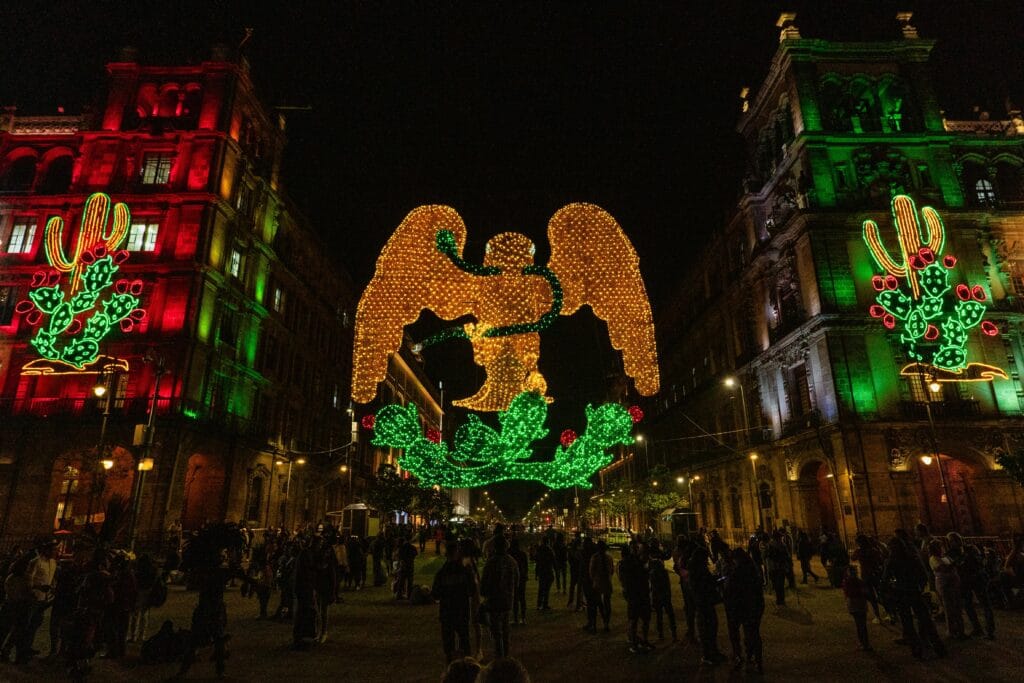
Your Mexico City World Cup 2026 itinerary starts before you ever set foot inside the Estadio Azteca. FIFA’s opening match lands here on June 11 — and if you’re flying in for Mexico’s games, you have one chance to see this city at its most alive, before every tourist spot adds 30-minute queues and every restaurant doubles its prices. Here is the 3-day plan that uses your time exactly right.
Quick Answer
- Arrival strategy: Arrive Tuesday or Wednesday before your Saturday match. Three days is the minimum for the four non-negotiable experiences — everything else is filler.
- Top priority bookings: Hot air balloon over Teotihuacan (book 357659P1 on Viator) + Lucha Libre night tour (book 86240P2 on Viator) — both sell out during World Cup weeks.
- Base: Roma Norte or Condesa. Not Centro. Not the airport strip.

Why 3 Days Is the Sweet Spot (Not 2, Not 5)
The ideal Mexico City World Cup 2026 itinerary runs three full days — not two, not five. Two days in Mexico City feels like reading the first chapter of a book and calling it done. Five days without structure becomes expensive, disorganized, and exhausting in a city this size.
Three days — structured correctly — hits every major note.
The 4 things you cannot miss:
- Teotihuacan at sunrise (early. This is non-negotiable.)
- Lucha Libre at Arena México with a taco crawl before
- Coyoacán and the Frida Kahlo Museum (Casa Azul)
- Match day at Estadio Azteca
The 2 most common time-wasters to skip:
- Xochimilco on a Saturday. The floating gardens are genuinely beautiful on a quiet weekday. On weekends during World Cup season, they’re tourist gridlock with microphone-blasting music boats. Do this on a future trip, or skip entirely.
- The Zócalo at midday. Worth 20 minutes in the morning light. Not worth the 1.5-hour Uber crawl each way if you’re based in Roma.
The World Cup arrival window strategy:
Fly in Tuesday. Match is Saturday. Leave Monday.
That window gives you Wednesday recovery from altitude (don’t underestimate it — 2,250 metres), Thursday for Teotihuacan and the Lucha Libre night, Friday for Coyoacán and the city, Saturday for the match. Two nights of buffer on either side means you’re not making decisions when you’re already depleted.
This itinerary follows that structure exactly.

Day 1 Morning: Teotihuacan from the Sky
This is the one experience that separates Mexico City from every other World Cup host city. No tournament in 2026 offers anything remotely like floating over a 2,000-year-old pyramid complex at sunrise.
The alarm goes off at 3:30 AM. The hotel pickup arrives between 4:00 and 4:30 AM. The drive northeast takes 45–75 minutes depending on traffic. By the time you reach the launch site, the sky is beginning to shift from black to a deep bruised blue.
What the flight actually looks like:
The flight typically covers the Pyramid of the Sun, Pyramid of the Moon, and the Avenue of the Dead. The Pyramid of the Sun appears below as the full spatial layout of the ancient city becomes comprehensible in a way it never does from the ground. The flight lasts approximately 40–50 minutes depending on wind conditions.
After landing, a champagne (or non-alcoholic) toast and a commemorative certificate. Then breakfast — ideally inside a natural volcanic cave, a distinctive element of the better tour packages that reviewers consistently call the unexpected highlight of the day.
After breakfast, guided entry into the Teotihuacan archaeological zone. You’re walking the Avenue of the Dead by 10 AM, ahead of the general tourist wave.
Back at your hotel by 12:30–1:00 PM. Rest for two hours. You’ve earned it.
For the full breakdown of what’s included, what operators are worth booking, and the honest pros and cons of the 4 AM start, read the complete guide: → Is a Hot Air Balloon Over Teotihuacan Worth the 4am Wake-Up?
→ Book the Hot Air Balloon + Cave Breakfast + Pyramids on Viator
Book at least 3–4 weeks ahead for June World Cup dates. This is the most sold-out morning experience in the Mexico City region during peak season.
Afternoon (after rest): Bosque de Chapultepec is 5 minutes from Roma Norte by Uber. The Museo Nacional de Antropología sits inside the park — one of the best anthropology museums in the world, home to the Aztec Sun Stone and the most comprehensive pre-Columbian collection in the Americas. Allow 2 hours. Entry: [VERIFY: approximately 90 MXN / ~$4.50 USD].

Day 1 Evening: The Night Tour That Defines the Trip
Most World Cup visitors eat dinner, scroll their phones, and sleep.
This is the wrong choice.
The energy arc of Day 1 is deliberate: ancient civilisation in the morning, living Mexican street culture at night. The contrast is the point. After a day that’s given you altitude, pyramids, and scale — you want something loud, intimate, and completely of the present.
That’s the Lucha Libre + Tacos + Mezcal night tour.
How the evening runs:
You meet your guides (two per group, bilingual, consistently well-reviewed by name across hundreds of verified reviews) at a taquería in Roma Norte or near Centro. Usually between 6:00 and 7:00 PM.
First stop: tacos at a local spot the guides actually eat at. Not tourist tacos. The real kind — the kind where the trompo (vertical rotisserie) has been spinning since noon and the tortillas are made while you watch. Alongside this comes beer, mezcal, or pulque, depending on what you want.
While you eat and drink, the guides teach you. The history of Lucha Libre. The difference between rudos (heels) and técnicos (faces). The correct Spanish insults. The chants. By the time you leave the taquería, your group of 20 strangers is already a crew.
Walk to Arena México. Guides handle everything — tickets, entrance, seating. You just follow.
Inside the arena, the atmosphere is electric. You watch 4–6 matches of increasing drama, with aerial acrobatics that are genuinely impressive — choreographed fighting so athletic it borders on graceful. Groups are capped at 20 people and typically make multiple stops at different taco venues before the arena.
Back to Roma Norte by 10:30–11:00 PM. Guides stay with the group until everyone has an Uber or is walking home.
Important World Cup note: Lucha Libre runs Tuesdays, Fridays, Sundays, and Saturdays. During World Cup weeks, Friday and Sunday slots will fill fastest. Book 3–4 weeks ahead minimum for June dates.
→ Book Tacos + Beer + Lucha Libre — Best Night in Mexico City on Viator

Day 2: Mexico City’s Most Underrated Neighbourhood + Roma Norte
Morning: Coyoacán
Uber or Metro (Line 3, Viveros/Derechos Humanos station) from Roma Norte. Roughly 20 minutes either way.
Coyoacán is a different city. Colonial-era cobblestone streets, 16th-century mansions painted in terracotta and ochre, Jardín Centenario plaza in the middle of it all with its famously photogenic fountain. It’s quieter than Roma, more residential, with a permanent Sunday-market energy even on weekdays.
Start at Jardín Centenario. Get a coffee from any of the cafés on the south side. Walk three blocks to Casa Azul.
The Frida Kahlo Museum (Casa Azul):
Book in advance — tickets sell out weeks ahead under normal conditions. During World Cup 2026, assume they sell out faster. Museum entry: [VERIFY: approximately $12–15 USD]. The museum preserves her actual living space: the wheelchair, the corsets, original artworks, personal correspondence, her wardrobe. Most visitors spend 90 minutes inside and describe it as more emotionally resonant than they expected.
The 86240P4 walking tour on Viator covers the full Coyoacán experience — Plaza de la Conchita, Jardín Centenario, Coyoacán Market for street snacks (churros, tostadas), and the Frida Kahlo Museum with VIP museum tickets included. Over 1,300 verified reviews.
→ Book the Frida Kahlo VIP Walk + Museum Tickets + Markets & Churros on Viator
This is the same operator that runs the Lucha Libre night tour — if you’re booking both, you’re working with a team that has a very strong track record in Mexico City guided experiences.
Lunch: Mercado de Coyoacán at Ignacio Allende 38 — tostadas de tinga, enchiladas verde, $3–6 per plate. Among the best-value regional Mexican cooking in the city. Eat here rather than the tourist-facing restaurants on the plaza perimeter.

Afternoon: Roma Norte + Condesa Walk
Back to Roma by Uber ($4–6). Roma Norte is one of Latin America’s best food and architecture neighbourhoods, and it’s best experienced on foot in the afternoon when the light softens.
Walk Álvaro Obregón — the main boulevard, shaded by jacaranda trees, lined with Art Deco facades and a central pedestrian median. Stop at any mezcalería that catches your eye. The Roma/Condesa area has more excellent mezcal bars per block than anywhere else in the city.
Parque México in Condesa: the neighbourhood’s oval-shaped Art Deco park, full of locals walking dogs, reading, and playing chess. 20 minutes here before dinner recalibrates the pace of the day.
Evening: Rooftop Bars
Roma Norte has several good rooftop spots for the final evening before match day. The light over the city after 7 PM, looking west toward the mountains, is worth seeing from height at least once.
Drink budget: $6–12 per cocktail at most Roma rooftop bars. Cash or card accepted at most spots in the neighbourhood.
Day 3: Match Day — Estadio Azteca
This is what you came for.
The Estadio Azteca context: This is the only stadium in history to host two World Cup finals (1970 and 1986). Temporarily renamed “Mexico City Stadium” for FIFA 2026 branding. Capacity: 87,000. Altitude: 2,200+ metres. Atmosphere on Mexico match days: genuinely unlike anything else in football.
Confirmed 2026 match schedule:
| Date | Match | Kickoff (CT) |
|---|---|---|
| June 11 | Mexico vs South Africa (Opening Match) | 2:00 PM |
| June 17 | Uzbekistan vs Colombia | 9:00 PM |
| June 24 | Mexico vs UEFA playoff winner | 8:00 PM |
| June 30 | Round of 32 | 8:00 PM |
| July 5 | Round of 16 | 7:00 PM |
Getting to the stadium — the only reliable method on match days:
Metro Line 2 southbound → Tasqueña station. Transfer to Tren Ligero → Estadio Azteca station. Total transit time: ~45 minutes from Roma Norte. Total cost: ~12 MXN (~$0.60 USD) each way.
Do not attempt Uber on Mexico match days. The roads around Coyoacán and southern CDMX reach gridlock from 90 minutes before kickoff. Uber drivers know this and route around the stadium — a 45-minute journey becomes 2+ hours and 5× the price. Leave for the Metro station a minimum of 2.5 hours before kickoff.
Best fan zones for World Cup 2026:
Fan zones will be confirmed closer to the tournament, but based on 1986 patterns and FIFA 2026 planning announcements, expect official fan zones in the Zócalo (Centro Histórico), Reforma corridor, and designated spaces near Estadio Azteca. Check FIFA’s official 2026 website for confirmed locations as June approaches.

If you don’t have tickets:
The atmosphere in Roma Norte, Condesa, and Zona Rosa during Mexico matches is extraordinary regardless of whether you’re inside the stadium. Bars on Álvaro Obregón and near Parque España screen every Mexico match. The street outside fills from an hour before kickoff.
For a game-day experience without a ticket: find a bar with outdoor seating near Roma Norte around 90 minutes before kickoff, order a michelada, and let the neighbourhood come to you.
Altitude reminder for match day: Estadio Azteca sits at 2,200 metres. Alcohol dehydrates significantly faster at altitude. Match duration at high altitude feels physically different from sea level. Hydrate continuously throughout match day. Pace your drinks.
Teotihuacan vs Mexico City: The 48-Hour Compressed Version
Coming for only 2 days? Here’s the tight version.
Day 1: Balloon + pyramids (4:30 AM pickup, back by 1 PM). Rest for 2 hours. Chapultepec or Roma exploration in the afternoon. Lucha Libre night tour (from 6 PM, back by 11 PM). This is a genuinely long day — 19 hours of active experience. It works, but don’t underestimate the pace.
Day 2: Coyoacán morning (Frida Kahlo Museum + Mercado). Back to Roma by 1 PM. Match preparation and stadium departure.
What you lose vs the 3-day version: The afternoon recovery after Teotihuacan (which the altitude makes genuinely important), the Roma Norte architectural walk, and the rooftop evening.
What you keep: The four non-negotiable experiences. It’s achievable. Just pace the alcohol and sleep.

Accommodation: Where to Stay for This Itinerary
Roma Norte is the correct base. Walkable to the best food in the city, 5–10 minutes by Uber to Coyoacán, well-served by Uber, and positioned on Line 2 for easy stadium Metro access. The neighbourhood energy during World Cup — specifically on Mexico match days — will be extraordinary in Roma’s outdoor bars and street-level cafés.
| Budget tier | Neighbourhood | Expected cost (normal) | Expected cost (WC weeks) |
|---|---|---|---|
| Budget | Roma Norte hostel or guesthouse | $25–50/night | $50–90/night |
| Mid-range | Roma Norte boutique hotel | $70–130/night | $120–200/night |
| Premium | Polanco (Four Seasons, Las Alcobas) | $200–400/night | $350–700/night |
Book immediately. Roma Norte rooms for June 11 and June 24 match windows were filling 6+ months out. Mid-range boutique hotels in the neighbourhood have limited inventory and no overflow — unlike Polanco luxury properties with larger room counts.
Practical World Cup Mexico City Tips
Altitude is the main underrated hazard. Your first 24 hours at 2,250 metres, arrive hydrated, skip heavy alcohol, eat light. Headaches are normal. Pace up the pyramids. Use the rest platforms.
Currency. Carry peso cash: $50–100 USD equivalent covers most days. Street taquerias, Coyoacán market, and Teotihuacan vendors are cash-preferred or cash-only. ATMs in Roma and Condesa are safe and well-maintained. Current exchange rate: [VERIFY before publishing — approximately 17–18 MXN per USD].
Connectivity. An eSIM activated before you fly eliminates airport SIM hassles. Mexico data coverage in CDMX and along the Teotihuacan highway is reliable. Get 5–10 GB minimum for Google Maps, Uber, WhatsApp communication with tour operators.
Uber. GPS-tracked, consistently priced, available everywhere in CDMX. Download and add payment before you fly. Never take unmarked street taxis. Uber from Roma Norte to anywhere in the city: $3–10 USD. Exception: match days near the Azteca — Metro only.
Security. Roma Norte, Condesa, Polanco, and Coyoacán are low-risk. FIFA and the Mexico City government will have heightened security throughout the tournament period. Standard precautions apply everywhere: Uber over street taxis at night, minimal flashy items on the Metro.
Sunscreen at Teotihuacan. Multiple verified reviewers mention unexpected sunburn. The site is entirely exposed, altitude increases UV intensity, and you’ll be outside for 3–4 hours. SPF 50+ before leaving the hotel. Reapply after 2 hours.

Full Booking Checklist
Book these three tours before anything else. June World Cup dates will hit capacity faster than any other period of 2026. Free cancellation available on all three — book now, adjust later if plans change.
✅ Booking 1 — Teotihuacan Hot Air Balloon (Day 1 Morning)
Tour code: 357659P1
What’s included: Hotel pickup from CDMX, sunrise balloon flight (~45–50 min), cave breakfast, guided pyramid access
When to book: 3–6 weeks ahead minimum for June dates
→ Book Now on Viator
✅ Booking 2 — Tacos + Beer + Lucha Libre Night Tour (Day 1 Evening)
Tour code: 86240P2
What’s included: Taco crawl at local taqueria, mezcal/beer at cantina, bilingual guides, Lucha Libre arena tickets (Arena México), souvenir
When to book: 2–4 weeks ahead; Friday and Sunday June slots fill first
→ Book Now on Viator
✅ Booking 3 — Frida Kahlo VIP Walk + Museum Tickets (Day 2 Morning)
Tour code: 86240P4
What’s included: Guided Coyoacán walk, Plaza de la Conchita, Jardín Centenario, Coyoacán Market, Frida Kahlo Museum VIP entry with tickets included, churros
When to book: 2–3 weeks ahead; museum capacity is strictly enforced
→ Book Now on Viator

→ Browse all Mexico City experiences and check current availability on Viator
Extend Your Trip to the Yucatán?
Mexico in June means the World Cup. But Mexico’s Yucatán Peninsula is also 90 minutes by air from CDMX. If you’re adding 3–4 days before or after the tournament, the cenotes of Cancun and the Riviera Maya are a completely different country from Mexico City — turquoise groundwater, jungle, Mayan archaeology.
→ Full family safety guide: Family Cenote Tour Cancun 2026: What Every Parent Needs to Know Before Booking
FAQ
Is Mexico City safe for World Cup visitors in June 2026?
Roma Norte, Condesa, Polanco, Coyoacán, and Juárez/Zona Rosa are low-risk areas for international tourists. FIFA and Mexico City government will maintain heightened security throughout the tournament. Standard precautions apply everywhere — Uber over street taxis at night, watch your belongings on the Metro.
How far is Teotihuacan from Mexico City?
45–50 km northeast of centre. 45–75 minutes by car depending on traffic. All Viator-booked tours with hotel pickup handle transport — no independent navigation required.
Can you climb the pyramids at Teotihuacan?
Yes. Both the Pyramid of the Sun (248 steps) and Pyramid of the Moon are open to climb. Wear flat shoes with grip. No handrails on the steepest sections. Pace carefully — altitude makes physical effort noticeably harder here.
What time does Teotihuacan open?
The archaeological zone opens at 8:00 AM. Hot air balloon tours depart at dawn — typically 3:30–4:30 AM pickup depending on your hotel location. You’re inside the site before the crowds arrive.
Do the Lucha Libre tours include arena seats?
Yes. The 86240P2 tour includes reserved arena seats at Arena México. Guides handle ticketing and seating logistics — you don’t queue. Seats are typically ground floor, approximately 20 rows from the ring.
How far ahead should I book for World Cup 2026 dates?
The balloon tour: 3–6 weeks minimum. The Lucha Libre tour: 2–4 weeks. The Frida Kahlo walking tour: 2–3 weeks. Accommodation: book immediately if you haven’t already.
What’s the altitude situation at Estadio Azteca?
2,200+ metres. Mild breathlessness and lightheadedness are normal for first-time high-altitude visitors. Not dangerous. Hydrate throughout match day. Alcohol dehydrates faster at altitude — pace accordingly.
Is the Frida Kahlo Museum worth it?
Yes, with a caveat: it’s small. Allow 90 minutes — not a full afternoon. The emotional experience of being in her actual living space (not just viewing artwork) is what visitors consistently describe as the differentiator. Book tickets in advance; walk-ins are rarely available during peak periods.
What cash should I bring?
Carry 1,000–2,000 MXN ($55–110 USD) per day in cash. Street food, market vendors, and some Teotihuacan stalls are cash-only. ATMs in Roma and Condesa are reliable. Carry a mix of cash and card.
Bottom Line
The Azteca on June 11. The Pyramid of the Sun at dawn two days earlier. A Lucha Libre arena at 10 PM with mezcal still on your tongue. Frida Kahlo’s blue house in the morning light of Coyoacán.
That specific combination is what makes this Mexico City World Cup 2026 itinerary worth planning properly — it only exists for this brief window in 2026.
Book the three tours. Stay in Roma Norte. Leave 2.5 hours for the Metro on match day.
Everything else takes care of itself.
→ Book all three tours and check June 2026 availability on Viator
About This Guide: Research-based travel itinerary synthesising verified Viator traveler data (1,000+ reviews), confirmed FIFA 2026 scheduling, and Mexico City destination logistics. All [VERIFY] placeholders should be confirmed against live Viator listings and current exchange rates before publishing. Pricing is approximate as of April 2026.
More destination guides at besttoursexperiences.com.