Fitz Roy Hike November 2026: Is November Too Early? (Honest Trail Guide)
Quick Answer: Fitz Roy Hike November 2026
- Is November too early? No — but the trail splits into two zones: snow-free below 1,000m, lingering snow above it.
- Microspikes needed? Recommended for the final approach in November; rentable in El Chaltén (~$15/day).
- Departure time: aim for 4:00-4:30 AM to catch clear morning light.
- Trail distance: 20-24km round trip, 8-10 hours.
- Park entry fee: Paid access applies since October 2024 — purchase online in advance.
Most Fitz Roy guides say the same thing about November: “the season technically starts, but expect some snow at higher elevations.”
That’s true and also nearly useless for actually packing your bag.
This fitz roy hike november 2026 guide gets specific about where the snowline realistically sits, when to leave El Chaltén to catch the mountain before the clouds do, and what changed with park access that a surprising number of still-circulating blog posts have not caught up with.
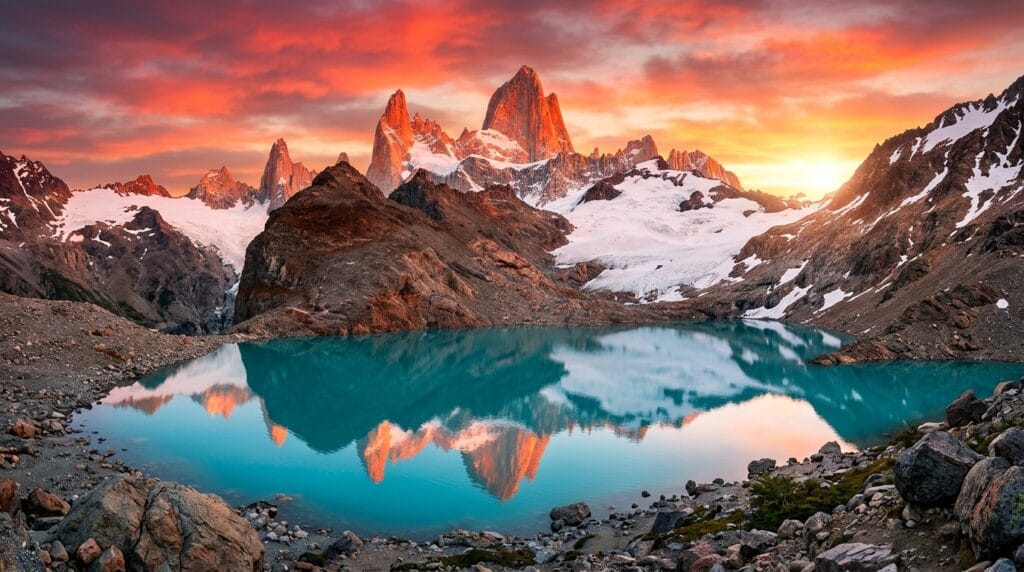
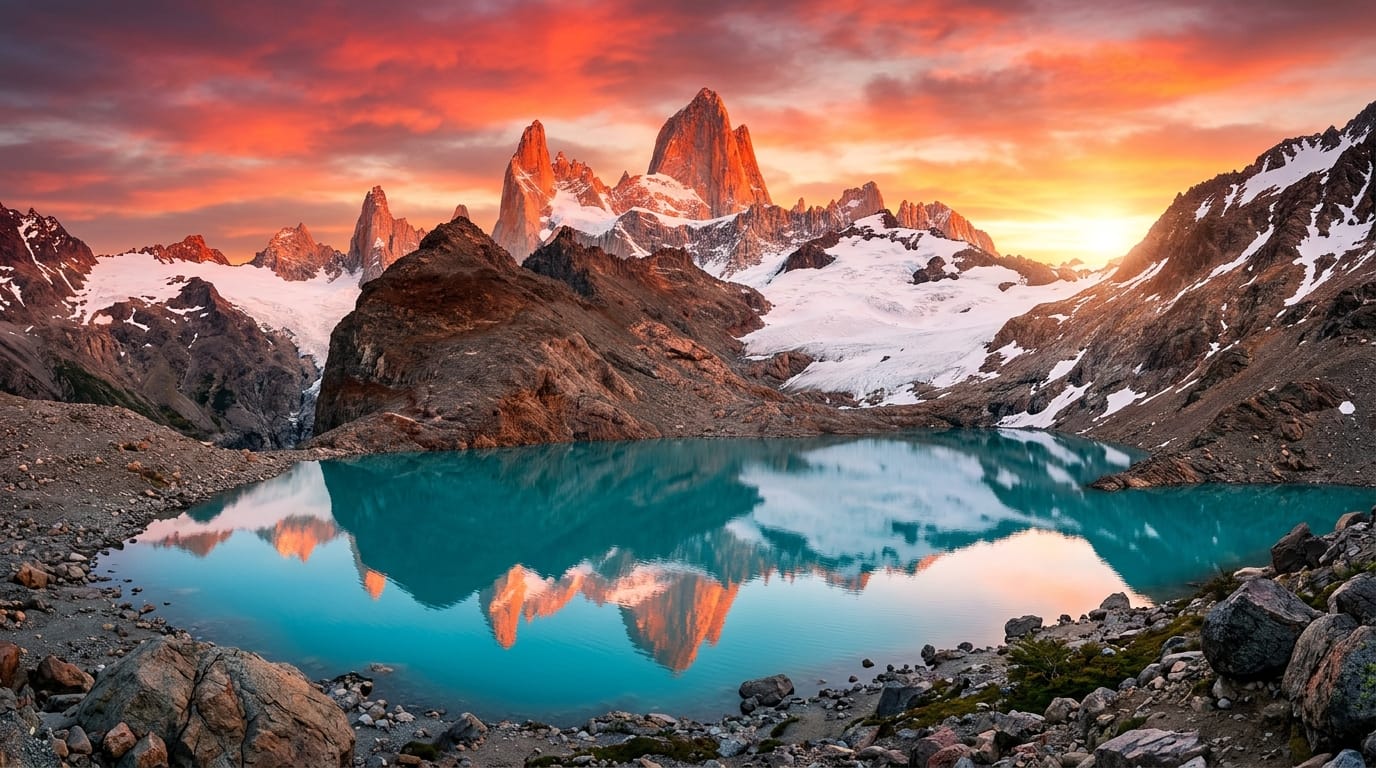
“Leaving El Chaltén at 4:15 AM by headlamp meant we reached Laguna de los Tres right as Mount Fitz Roy glowed fiery red at sunrise. Worth every step!”
— David K., Verified Traveler Review
What November Actually Looks Like on the Trail
The hike to Laguna de los Tres divides cleanly by elevation.
Below roughly 1,000 metres, November conditions are straightforward: the trail through Patagonian lenga beech forest is snow-free, well-marked, and manageable in standard hiking boots.
This lower section — from El Chaltén out toward Río Blanco camp — is one of the most rewarding forest walks in South America on its own terms, gaining elevation gradually along glacier-fed streams before the landscape opens into the exposed granite terrain above.
Above roughly 1,000 metres, patchy snow from the Patagonian winter typically lingers into early-to-mid December in a given season, and the final steep approach to the lagoon is where hikers most often encounter it directly underfoot.
This isn’t glacier ice — it’s consolidated snow left over from winter, and depending on the day it can range from soft and easy to walk through, to a firmer crust that doesn’t reliably support your full weight without traction.
Conditions genuinely vary year to year and week to week, which is exactly why checking with a local rental shop or your guide the day before matters more than any fixed calendar date.
Daytime highs in the valley run roughly 10-15°C in November, with near-freezing conditions common at the lagoon itself regardless of the valley weather.
Daylight runs long — 14-15 hours — which gives real flexibility for an early departure.
And the trade-off for hiking this early in the season is worth stating plainly: November crowds are a fraction of what the trail sees in January, and a clear-morning arrival at the lagoon on a weekday can feel close to having the place to yourself, compared to the 200-400 daily hikers the trail sees at the height of summer.
The Gear List for November Specifically
| Item | Why it matters in November |
|---|---|
| Microspikes or light crampons | Recommended for the final approach above ~1,000m; rent in El Chaltén (~$15/day) |
| Windproof outer layer | Sustained strong wind is a Patagonia constant, not a worst-case scenario — a waterproof shell alone often isn’t enough |
| Trekking poles | Meaningfully safer on the steep, occasionally snowy final section, both up and down |
| Headlamp | Essential for a pre-dawn departure — you’ll be hiking in darkness for the first 1.5-2 hours |
| 2L+ water, full-day food | Streams exist en route but filtration is the safer default; this is an 8-10 hour day |
| Warm layers | The lagoon runs near-freezing regardless of valley temperature |
Trail runners or lightweight sneakers are not recommended for the upper section in November — this is the single most common gear mismatch reported by hikers who attempted the full route unprepared.
The 4 AM Departure — Why It Actually Matters
Fitz Roy has a well-earned reputation for spending large parts of the day under cloud, and the practical pattern is consistent: morning hours, from around sunrise until roughly mid-morning, offer the best odds of a clear granite view, while afternoons more often bring cloud cover over the summit.
Hikers who leave El Chaltén at a leisurely 9 AM commonly arrive at the lagoon well into a cloud window, having done the full climb for a view that isn’t there.
In November, sunrise falls around 5:45-6:00 AM, which means a 4:00-4:30 AM departure gives you a realistic shot at reaching the lagoon while the mountain is still clear.
That’s genuinely early, and it means hiking the first hour or two by headlamp — but it’s the single highest-leverage decision in planning this specific hike, more impactful than any gear choice.
The Park Fee Correction (What Actually Happened, Not What Some Blogs Say)
As of early 2026, rates run approximately 45,000 ARS per day for non-Argentine visitors, with a 50% discount if you’ve paid within the previous 72 hours (useful if you’re hiking both Laguna de los Tres and Laguna Torre on separate days), plus 3-day and 7-day Flexipass options for longer stays.
Argentine residents and Santa Cruz province residents pay reduced rates.
Tickets for the northern (El Chaltén) sector must be purchased online in advance through the official APN ticketing portal — cash is not accepted at the trailhead. Check the official APN Argentina ticketing site for current rates before you travel, since pricing is reviewed seasonally.
The Wind Day Protocol
Not every November day is hikeable all the way to the lagoon.
Patagonia’s wind reputation is not exaggerated — strong, sustained gusts are possible on any day of the season, and when conditions exceed safe thresholds, rangers post closure notices for the exposed upper trail section.
This is routine, not a failure of planning. A simple protocol:
- Check the forecast the night before for El Chaltén specifically.
- Pass the ranger station on your way out — closure notices for the day are posted on the board.
- If the upper Laguna de los Tres section is closed, pivot same-morning to Laguna Torre (see below), which is rarely, if ever, affected by the same wind closures given its lower, more sheltered profile.
- If conditions are marginal but open, reassess at treeline — if wind is strong enough to meaningfully push you off balance in the open, that’s the signal to turn back before the exposed final approach.
Guided Tours: Verified Options
If coordinating microspikes, a pre-dawn departure, and daily condition checks independently feels like too many moving parts, a guided tour handles all three in a single booking — guides carry group traction equipment and make the daily call on whether the upper section or the Laguna Torre alternative is the better day.
El Chaltén: Full-Day Trekking to Laguna de los Tres and Mount Fitz Roy
A full-day, small-group guided hike (max 10) to Laguna de los Tres with a professional guide, shared transfer logistics from El Chaltén, and scenic stops along the route. This is the most extensively reviewed Laguna de los Tres guided option currently on Viator for El Chaltén.
Check availability on Viator →Laguna de los Tres Hiking Day Trip from El Chaltén
A full-day small-group hike across the Fitz Roy Valley to Laguna de los Tres, led by a professional mountain guide — a solid alternative departure time and group size if the option above doesn’t fit your schedule.
Check availability on Viator →Laguna Torre Day Trip from El Chaltén
The easier full-day alternative — hikes to Laguna Torre (or Laguna de los Tres, tour-dependent; confirm the specific itinerary at booking) in a small group of no more than 15, without the elevation gain or November snowfield exposure of the Laguna de los Tres route.
Check availability on Viator →2-Day Self-Guided Adventure: Laguna de los Tres, Fitz Roy & Cerro Torre
For travelers with more time: a 2-day, 35km combined itinerary covering both major lagoons with overnight camping at Fitz Roy’s base, all meals and camping gear included, and full logistics handled — a genuinely different, more immersive way to see both sides of El Chaltén’s trail network without carrying your own overnight kit.
Check availability on Viator →Laguna de los Tres vs Laguna Torre: Which One First?
| Factor | Laguna de los Tres | Laguna Torre |
|---|---|---|
| Distance | ~20-24km round trip | ~18km round trip |
| Elevation gain | ~800m total, steep final ~3km | ~300-420m total — much gentler |
| Time | 8-10 hours | 5-6 hours |
| November gear | Microspikes recommended above ~1,000m | Typically no traction aid needed |
| Wind closures | Upper section can close on high-wind days | Rarely affected |
| Payoff | Closest approach on foot to Fitz Roy’s granite spires | Cerro Torre views + glacial lake, dramatically less effort |
Our take: if you’re reasonably fit and comfortable with 8-10 hours on trail, Laguna de los Tres is the marquee hike and worth prioritizing on your clearest forecast day.
If your fitness is moderate, your schedule is tight, or you’d rather not gamble a full day against November wind and snow variables, Laguna Torre is a legitimately spectacular hike in its own right — not a fallback.
Getting to El Chaltén
El Chaltén sits roughly 220km north of El Calafate, about 3 hours by paved road along Ruta 40 through open Patagonian steppe.
El Calafate holds the nearest commercial airport (FTE), with connections to Buenos Aires.
Most itineraries pair 2-3 nights in El Chaltén for hiking with 1-2 nights in El Calafate for the Perito Moreno Glacier, which operates year-round and is noticeably quieter in November than at the height of summer.
Frequently Asked Questions
Is the Fitz Roy hike suitable for beginners?
It’s demanding but not technical. In November the main obstacle for beginners is lingering snow above ~1,000m — a guided tour with supplied microspikes makes it accessible; independently, waiting until mid-to-late December is the more forgiving option.
Can I hike Fitz Roy without a tour?
Yes — it’s a standard, well-marked, self-guided trail. For November, rent your own microspikes, plan a pre-dawn departure, and check the ranger station’s closure board before setting out.
What happens if Fitz Roy is clouded over all day?
It happens, in any season. The forest walk and the lagoon itself are still worthwhile in cloud or mist — build a buffer day into a multi-night stay so a clouded-out attempt isn’t your only shot.
How many days should I spend in El Chaltén?
Minimum 3 nights for a weather buffer plus both main hikes; 4 nights if you want room for the multi-day Fitz Roy Loop.
Is hiking in El Chaltén still free?
No — paid access has applied to the northern sector of Los Glaciares National Park since October 2024, not “as of 2026” as some outdated posts claim. Check the official APN site for current rates.
Related Travel Reading
- Explore our Railay Beach November 2026 Guide.
- Chasing Northern Lights? Read our Abisko vs Rovaniemi Northern Lights 2026 Guide.
- Snorkeling cold waters? Read our Silfra Fissure Iceland Snorkeling Guide.