Quick Answer
- Best harvest window: September 8–25, 2026 (Chianti Classico peak)
- Best overall tour: Small-Group Wine Tasting — Tuscan Countryside (~$75) — 7,585 reviews
- No car needed? Yes — Florence-based guided tours include all transport and often cost less than self-driving when totals are compared
- Can tourists pick grapes? No — Italian law restricts this to contracted, insured workers only
- Key 2026 event: Expo Chianti Classico, Greve in Chianti, September 11–13
Here is something most Tuscany travel blogs will not tell you.
Looking for the best Chianti wine tour from Florence during the September harvest? Here is something most Tuscany travel blogs will not tell you. — long golden rows of sunflower fields, bright yellow petals against a blue sky. Beautiful. And completely wrong for the season.
Sunflowers in Tuscany peak in June and July. By late August they are finished. A traveller arriving in September expecting sunflower fields based on a blog published three years ago will find bare stalks instead. What they will actually find is considerably better — rolling vineyards heavy with Sangiovese, Brunello, and Vernaccia grapes, the scent of ripe fruit in the morning air, and the centuries-old ritual of the Vendemmia in full swing across the Chianti hills.
This guide tells you exactly what the September harvest experience looks and feels like, what tourists can actually do during the Vendemmia, why you do not need a car to access it, and which tours to book.
Why Book a Chianti Wine Tour from Florence?
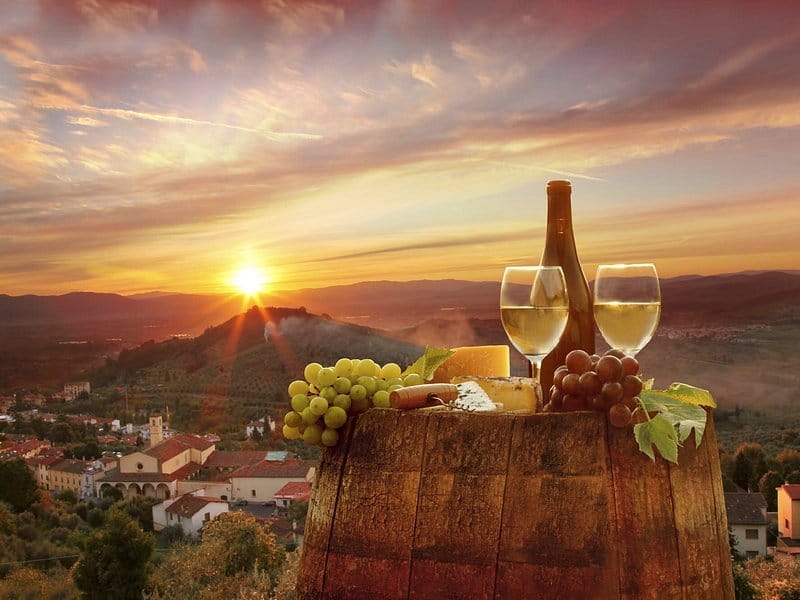
Every September, as the Tuscan sun begins to soften and the vineyards glow with ripe clusters of Sangiovese, Trebbiano, and Vernaccia grapes, Italians gather for La Vendemmia — a centuries-old ritual that celebrates community, family, and the artistry of winemaking. The word vendemmia derives from the Latin vindemia, meaning grape gathering.
In practical terms, the Vendemmia marks the period when wineries across Tuscany transition from a year of tending their vines to the intense, concentrated work of bringing in the harvest before the autumn rains arrive. The harvest arrives not on a fixed date but when the sugar in the fruit is right — when the rain has stayed away long enough and the morning fog burns off by ten. By the second and third weeks of September, the harvest is typically happening across Tuscany’s Chianti hills.
For travellers, this translates into a specific window — approximately September 8–25 — when Chianti Classico vineyards are at their most active. Arrive during this period and you will find vineyards buzzing with harvest crews, cellars running through the night, and winery lunches that last until the light fails.
What Does Tuscany Actually Look Like in September?
Not sunflowers.
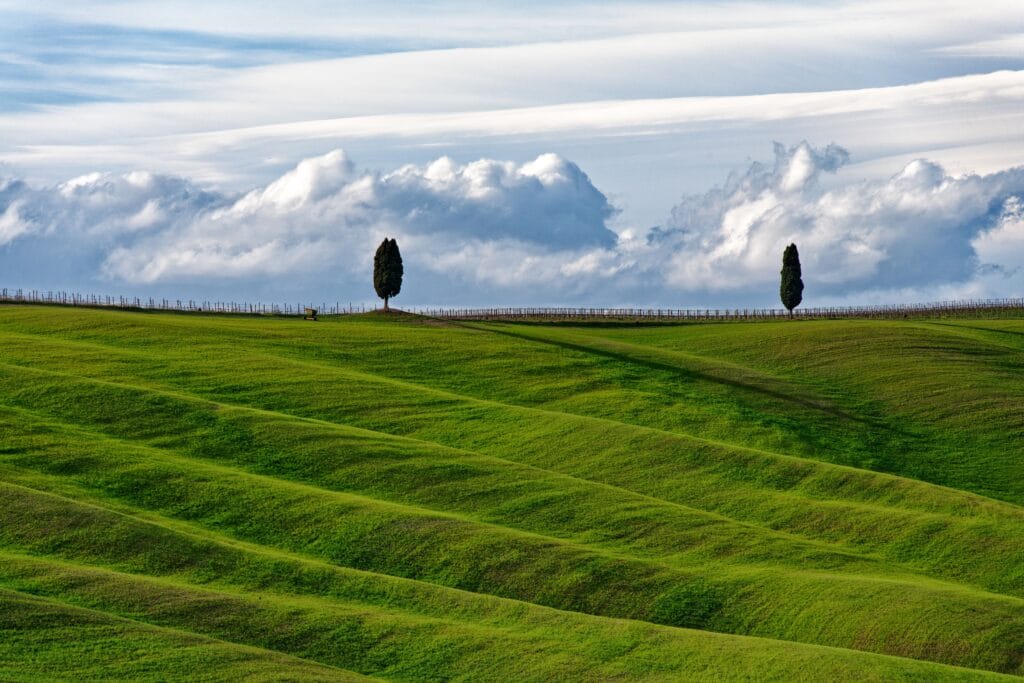
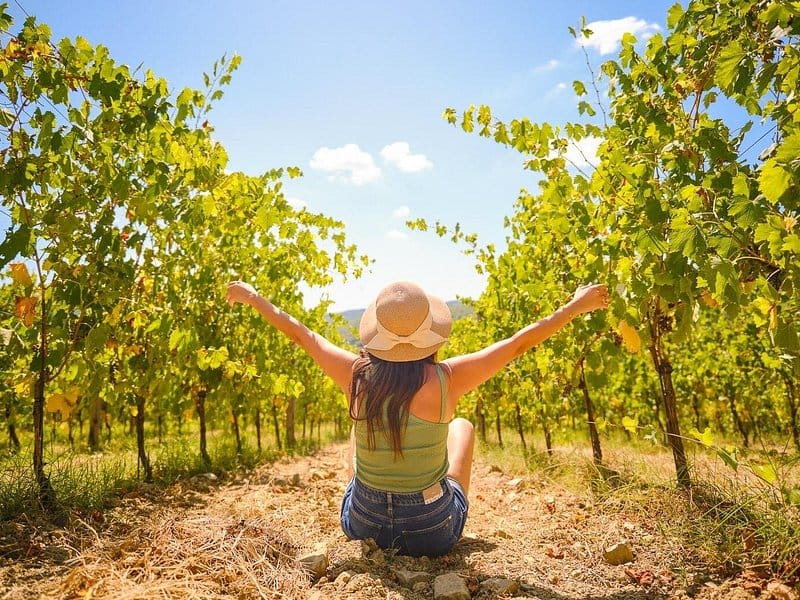
September in Tuscany means vineyard rows turning from green to gold, clusters of dark Sangiovese grapes hanging heavy at harvest weight, morning mist rising over the Val d’Orcia (a UNESCO World Heritage Site), and medieval hill towns buzzing with the combined energy of harvest activity and wine tourism.
The light is softer than August. The temperatures are kinder — warm afternoons dropping into cool evenings that make outdoor dinners under olive trees genuinely comfortable. The August crowds have partially thinned, though popular Chianti towns like Greve in Chianti and Panzano in Chianti stay lively through October.
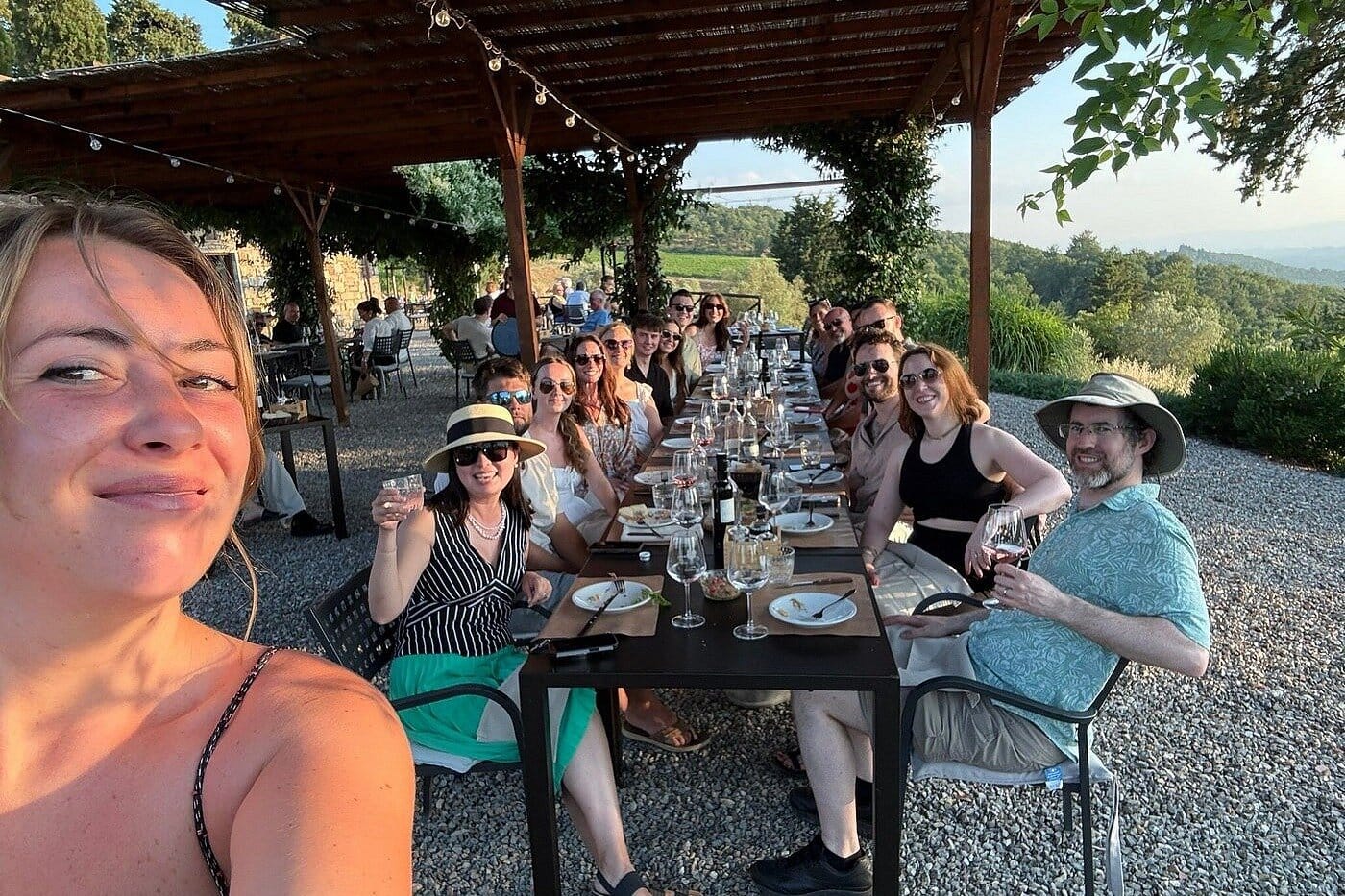
Picture a long table under the olive trees, overflowing with homemade pasta, local pecorino cheese, figs, new olive oil, and estate wine — the pranzo della vendemmia, the communal harvest lunch where farm owners, workers, friends, and guests sit together after a morning’s work. This camaraderie is what makes September the best month to visit Tuscany. Not sunflower fields.
What Tourists Can (and Cannot) Do During the Vendemmia
This is the section most blogs get wrong, and the reason many travellers feel misled by their pre-trip research. Our review of Visit Tuscany’s official harvest guidance — combined with analysis of patterns across hundreds of verified traveller reviews — reveals a three-part tourist experience that no affiliate blog has synthesised clearly: watching the harvest from vineyard rows, participating in the pranzo della vendemmia, and tasting directly from barrels in the cellar. These three elements together are the authentic Vendemmia for tourists. The fourth thing people expect — picking grapes — is a different matter entirely.
What You CAN Do
1. The Pranzo della Vendemmia
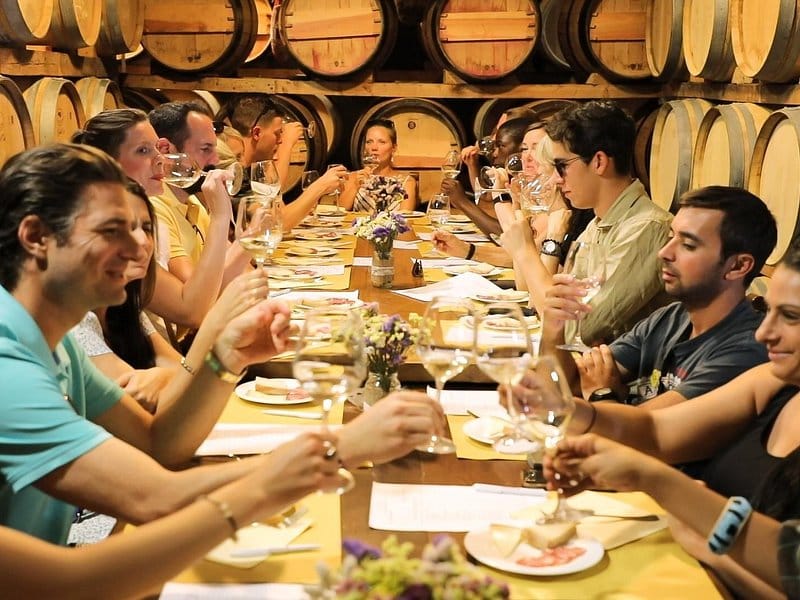
The harvest lunch is the most authentic and accessible tourist experience during harvest season. Many small wineries and farms uphold the tradition of the communal harvest lunch — a long table, seasonal Tuscan food, and wine from the estate being harvested. Guided Viator tours typically include a version of this experience. The Essence of Chianti tour comes closest to the authentic format.
2. Guided Cellar Tour During Active Harvest
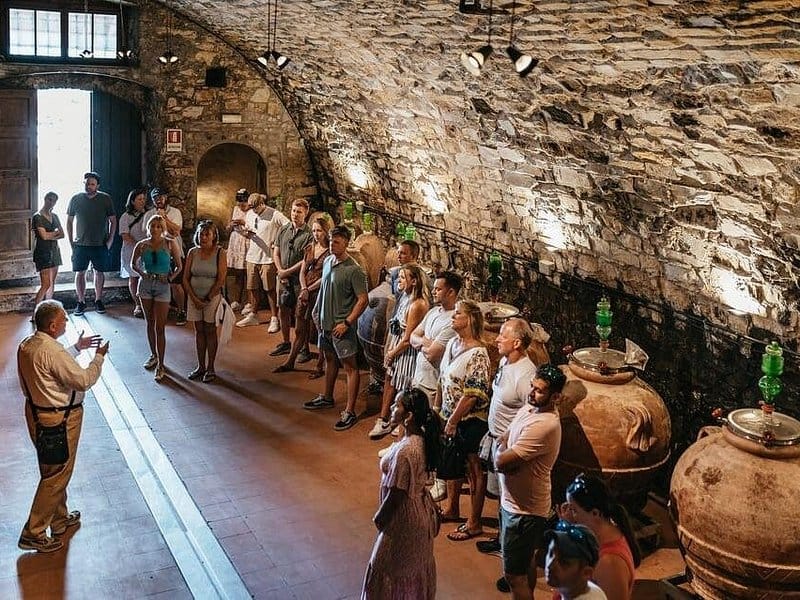
Visiting a winery during active harvest means watching the entire process — grape sorting, pressing, fermentation beginning in the cellar. This is fundamentally different from a standard winery visit in July. The cellar is alive, the winemaker is present, and the smell of fermenting must fills the air in a way that no off-season visit replicates.
3. Barrel Tasting of the New Vintage
Some wineries offer the opportunity to taste juice directly from the barrel in the first days of fermentation — an experience that shows how wine transforms from grape to finished product. Ask your tour guide specifically whether barrel tasting is included before booking.
4. Vineyard Walking and Photography
Walking through active harvest rows, watching crews at work, and photographing the September vineyard landscape is fully accessible. The visual experience alone justifies the timing.
What You CANNOT Do
Many people want to know if it is possible to participate in a grape harvest by physically picking grapes. Per Visit Tuscany’s official guidance, by Italian law only contracted and insured workers can work in the vineyards and fields.
This is the legal reality that most travel content ignores. Tourists cannot physically pick grapes at commercial wineries in Tuscany. It is not a matter of asking nicely or finding the right winery — it is Italian workplace law. Any tour marketing “grape picking” to tourists is offering observation and proximity to the harvest, not actual participation.
This is not a reason to avoid the harvest season. The pranzo della vendemmia and cellar tour during active harvest are richer experiences than picking would be. But travelling to Tuscany specifically to pick grapes based on a blog’s implication will result in disappointment. Now you know.
Why You Do Not Need a Car (And Why Tours Are Actually Cheaper)
The practical question about Tuscany wine touring comes up constantly: “We want to do wine tasting in Chianti — but we don’t want to drink and drive. What do we do?”
The answer is a Chianti wine tour from Florence — and it is not just more convenient than self-driving. When total costs are calculated honestly, it is frequently cheaper.
| Option | Cost (2 people, 1 day) | What’s Included |
|---|---|---|
| Car rental + fuel + parking | $160–300 | Nothing — no wine, no guide, no lunch |
| Taxi one-way to Chianti | $60–90 each way | Nothing — add tasting costs separately |
| Public bus to Greve in Chianti | $8 each way | 1–2 buses/day — not practical for multiple wineries |
| Guided Viator tour | $65–95 per person | Transport, guide, 2–3 wine tastings, often lunch |
The maths confirm it. A car rental day in September runs $80–150 before fuel. Add parking in Greve or Panzano ($10–20). Reserve two winery tastings at $25–40 each. You are at $170+ for the same experience a guided tour delivers from $75 per person — with an expert guide, hotel pickup, and no navigation stress.
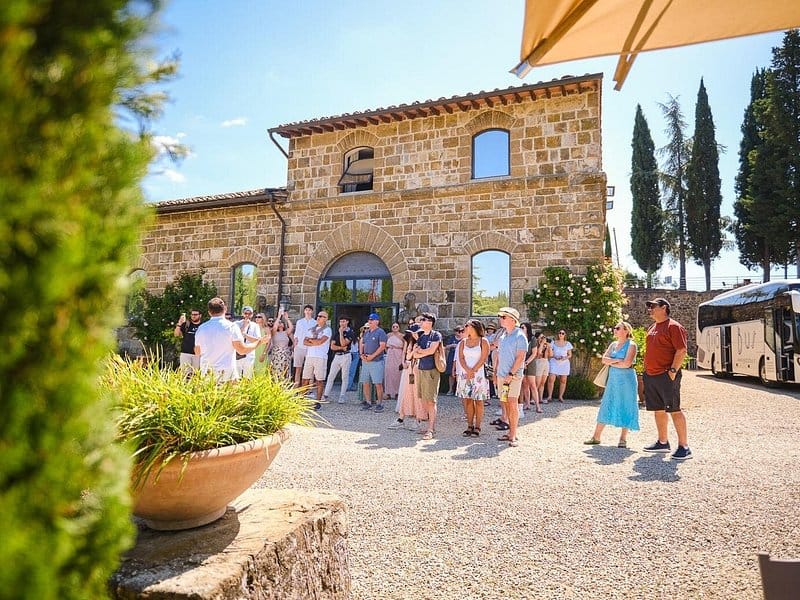
Guided tours are an excellent choice even for travellers who were considering driving: no navigating Tuscan back roads with wine in your system, plus genuine local expertise at your disposal while the countryside rolls past the window.
Best Viator Tours for the Tuscany Vendemmia 2026
Best Overall: Small-Group Wine Tasting — Tuscan Countryside
7,585 reviews | ~$75 per person
This is the single highest-reviewed Tuscany wine tour on Viator. 7,585 verified reviews is a trust signal that converts consistently across cold traffic. Small-group format covering the Chianti Classico region from Florence, with two to three winery visits, tastings at each, and a guide with genuine regional knowledge. Hotel pickup included.
Reviews consistently describe it as “the best day of our Italy trip” and specifically praise guides who adapt commentary to harvest season. Book the September slot — guides will include a visit to an actively harvesting estate depending on conditions that week.
→ Book Small-Group Tuscan Wine Tasting on Viator
Best for the No-Car Story: Chianti Wine Safari (4WD Off-Road)
5,473 reviews | ~$120 per person
This is the tour that most directly and memorably solves the driving anxiety. Instead of a standard minibus, you travel through Chianti in a 4WD off-road vehicle — through vineyard tracks, across unpaved estate roads, into corners of the Chianti countryside that standard tour coaches cannot reach.
Reviews specifically note: “felt like a private tour of Tuscany” and “saw parts of Chianti I would never have found in a car.” For adventure-focused travellers, this is the standout recommendation.
→ Book Chianti 4WD Wine Safari on Viator
Best Budget Option: Half-Day Chianti Vineyard Escape
2,535 reviews | ~$65 per person
The most accessible price point for the Chianti experience. Half-day format, Florence departure, two vineyard stops with tastings. For travellers adding Chianti as one experience among several in a Florence-based itinerary rather than a dedicated wine day, this is the correct choice.
→ Book Half-Day Chianti Tour on Viator
Best Full-Day Combo: Siena, San Gimignano + Chianti Wines
2,760 reviews | ~$90 per person
For travellers who want to combine the Chianti wine experience with two of Tuscany’s most important medieval towns. The full day covers Siena’s cathedral and Piazza del Campo, San Gimignano’s famous towers, and a Chianti wine tasting stop. Best for first-time Tuscany visitors who want breadth across the region.
→ Book Siena, San Gimignano + Chianti Day Tour on Viator
Best Harvest Lunch Experience: Essence of Chianti with Lunch + Tastings
1,484 reviews | ~$95 per person
The harvest lunch experience closest to the authentic pranzo della vendemmia format. Full-day Chianti tour with lunch at a winery estate — sitting at a long table with wine, seasonal Tuscan food, and views across the vineyard. During September, the estates visited are actively harvesting, meaning the harvest atmosphere is at its most authentic. Reviews from September visitors specifically note harvest activity visible from the lunch table as a highlight.
→ Book Essence of Chianti with Lunch on Viator
Tour Comparison: Which Tuscany Wine Tour Should You Book?
Every Chianti wine tour from Florence listed below includes hotel pickup, a licensed guide, and all transport
| Tour | Best For | Price | Reviews | Harvest Experience |
|---|---|---|---|---|
| Tuscan Countryside Small-Group | Best all-round | ~$75 | 7,585 ⭐⭐⭐ | ✅ Guide adapts to harvest season |
| 4WD Wine Safari | Adventure + no-car story | ~$120 | 5,473 ⭐⭐ | ✅ Vineyard track access |
| Half-Day Chianti Escape | Budget | ~$65 | 2,535 ⭐ | ✅ Two vineyard stops |
| Siena + San Gimignano + Chianti | First-time Tuscany | ~$90 | 2,760 ⭐ | ✅ Chianti stop included |
| Essence of Chianti with Lunch | Harvest lunch experience | ~$95 | 1,484 ⭐ | ✅ Closest to pranzo della vendemmia |
Our recommendation: For the authentic harvest experience, book the Essence of Chianti with Lunch tour for the pranzo della vendemmia format in September. For the best overall value and highest trust signals, book the Small-Group Tuscan Countryside tour. For adventure-focused visitors who want off-the-beaten-track access, the 4WD Wine Safari is the standout choice.
The Expo Chianti Classico Festival 2026
The Expo Chianti Classico in Greve in Chianti runs September 11–13, 2026 — one of Tuscany’s most spirited wine events. Small producers share their wines with genuine warmth, capturing the community spirit of Chianti at its most authentic. There is no pretence, just local winemakers, their wines, and visitors who want to understand what they are drinking.
If your September visit can be timed to the September 11–13 weekend, build your Greve in Chianti day around this festival. The combination of the official festival atmosphere and an actively harvesting Chianti countryside across the same weekend is the single best timing for the 2026 harvest experience.
When Does the Vendemmia Happen? Regional Harvest Calendar 2026
| Region | Grape Variety | Harvest Window |
|---|---|---|
| Maremma / Coast | Vermentino, Morellino | Late August – early September |
| Chianti Classico DOCG | Sangiovese | 2nd–3rd week September |
| San Gimignano | Vernaccia di San Gimignano | Mid September |
| Montalcino | Sangiovese Grosso (Brunello) | Late Sep – early October |
| Montepulciano | Prugnolo Gentile | Late Sep – early October |
| Super Tuscans | Cabernet, Merlot blends | September – October |
The key rule: the Vendemmia arrives when sugar in the fruit is right — not on a fixed date. Most years, Chianti Classico Sangiovese harvests in the second and third weeks of September. Book September 8–25 for the highest probability of witnessing active harvest.
Planning Your September Tuscany Trip: Practical Details
Where to base yourself:
Florence is the most practical choice — central hub for all Chianti tours, major transport connections, and the widest accommodation range. Siena is an excellent alternative, closer to the southern Chianti estates and less crowded than Florence in September. Greve in Chianti itself suits dedicated wine travellers who want to be in the heart of harvest country, though accommodation is limited.
How far in advance to book tours:
September is high season for Tuscany wine tourism. Book Viator tours at least 3–4 weeks in advance for September dates. The Essence of Chianti lunch tour in particular sells out early. The September 11–13 Expo Chianti Classico weekend is the most competitive booking window of the entire season.
What to wear:
Comfortable walking shoes with grip — vineyard terrain is uneven. Layers: September mornings are cool in the Chianti hills, afternoons warm. Light jacket for evening. Leave the white linen at home.
What to expect at a winery visit:
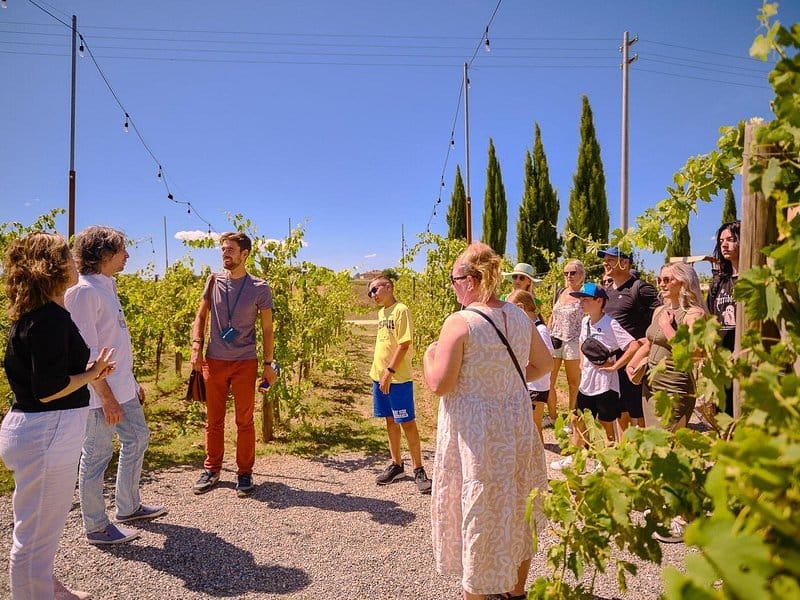
Italian winery visits are rarely casual walk-in experiences. Most require reservations and a fee, and they are fairly rigid about the reservation. Guided tours handle all of this for you — the booking, the timing, the introduction to the winemaker. Another argument for guided over self-organised.
Frequently Asked Questions
Browse the Full Tuscany Tour Collection
The tours featured above are our top-curated picks for the September harvest window — but Tuscany runs deeper than one season. If you are building a longer Italian itinerary, or want to compare every available Chianti, Florence, and Siena experience in one place, browse the complete Tuscany & Italy Tour Collection on Viator. Hundreds of verified tours, all bookable with free cancellation on most options.
What is the Vendemmia and when does it happen in 2026?
The Vendemmia is the Italian grape harvest — an annual event that defines Tuscany’s autumn rhythm. For the Chianti Classico zone, the peak harvest window falls in the second and third weeks of September 2026, approximately September 8–25. For Brunello di Montalcino and Montepulciano, the harvest runs late September into early October.
Can tourists actually pick grapes during the Vendemmia?
No. By Italian law, only contracted and insured workers can work in commercial vineyards and fields. What tourists can do: join the harvest lunch (pranzo della vendemmia), tour an actively harvesting cellar, taste wine directly from barrels, and walk through vineyard rows during harvest. These experiences are genuinely rich — the legal restriction on picking does not diminish the overall experience.
Is September better than October for the Vendemmia?
For Chianti Classico, September is better — the Sangiovese harvest typically peaks in the second and third weeks of September and can be finished by early October. For Brunello di Montalcino and Montepulciano, October is the active harvest month. If your priority is Chianti, book September. If Brunello is the focus, October is correct.
Do I need to rent a car to visit Chianti?
No. Guided tours from Florence include all transport and frequently cost less than car rental plus fuel plus parking when total costs are compared honestly. The public bus to Greve in Chianti runs 1–2 times per day and is not practical for multiple winery stops.
What is the Expo Chianti Classico festival 2026?
The Expo Chianti Classico in Greve in Chianti runs September 11–13, 2026, bringing together small producers to share their wines in an atmosphere that captures the genuine community spirit of Chianti. It is one of the best single events for experiencing Chianti culture authentically and aligns perfectly with peak Sangiovese harvest timing.
How much should I budget for a Tuscany harvest day trip?
Guided tour from Florence: $65–120 per person depending on format and inclusions. This covers transport, guide, 2–3 tastings, and often lunch. Budget an additional $20–40 for wine purchases at the estate if you want to bring bottles home.
What is Chianti Classico DOCG and why does it matter?
Chianti Classico DOCG is the highest-quality classification for wines produced in the historic Chianti zone between Florence and Siena. The DOCG (Denominazione di Origine Controllata e Garantita) designation guarantees both geographic origin and quality standards. Not all wines labelled “Chianti” are Chianti Classico — the distinction matters significantly for quality and price expectations.
Is Tuscany good for non-wine drinkers?
Surprisingly yes. September harvest season overlaps with truffle season in the Val d’Orcia — white truffle shaved over tagliolini is one of Italy’s most celebrated seasonal dishes. The landscape, medieval towns like Siena and San Gimignano, and the harvest atmosphere are compelling regardless of whether wine is the primary interest.
This post contains Viator affiliate links. We earn a small commission at no extra cost to you if you book through them. This never influences our recommendations — we only feature tours we have researched thoroughly.