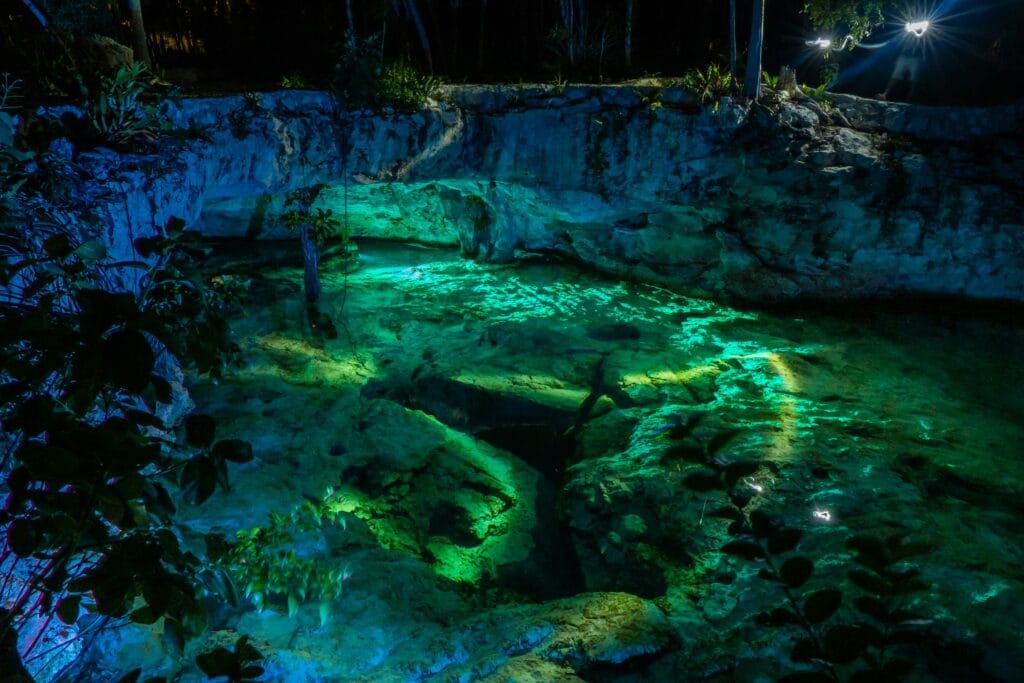
My 9-year-old came back from the Yucatan cenote tour and told every person she met for the next week: “I swam inside an ancient cave.” The cenote anxiety I’d had before booking — is it safe, is it too deep, do they have proper guides — dissolved about 45 seconds after she entered the water. Here’s what every parent actually needs to know.
Cenotes are not theme park rides. They’re ancient, sacred, genuinely beautiful — and yes, they require some planning if you’re bringing children. This guide breaks down the safety reality, which cenote types work for which ages, what verified traveler reviews consistently say, and exactly which tour to book for a family with kids under 15.
Quick Answer
- Safest family option: The Xenotes 4-in-1 Tour covers four distinct cenote types, mandatory safety briefings at every entry point, life vests included for all participants, and guides certified in water safety — making it the most structured family cenote experience available from Cancun.
- Age breakdown: Open-sky cenotes from age 5 (with life vest), semi-open from age 8, cave cenotes (guided only) suitable from age 10+.
- Cost range: Family cenote tours from Cancun typically run $85–$145 USD per adult, with children’s rates 20–30% lower on most Viator operators. [VERIFY: Current child pricing on the Xenotes tour page]

What’s the Honest Truth About Cenote Safety?
Let’s get this out of the way. Cenotes are not dangerous — but they’re also not paddling pools. They’re naturally occurring limestone sinkholes filled with groundwater, some reaching depths of 40+ meters. That sounds alarming. In practice, for a properly guided tour, the risk profile is comparable to supervised pool swimming.
Here’s the actual picture: Mexico’s state of Quintana Roo (where Cancun and Tulum sit) licenses cenote operators and requires safety protocols for tourist access. Licensed operators must provide life vests, trained guides, and emergency procedures at the water’s edge. Unlicensed operators — often cheaper, often promoted by resort desk staff — don’t always follow these standards. That distinction matters far more than which cenote you visit.
Traveler reviews from [VERIFY: current review count] Viator cenote bookings consistently note two things: families with young children felt safe and supported when using structured tour operators, and the rare negative experiences almost always involved smaller, unregulated operators found at the cenote entrance. The lesson is simple. Book through a verified operator. Don’t pay the person at the gate.
Which Cenote Types Are Actually Safe for Children? (Age Guide)
Not all cenotes are the same structure. Understanding the four types helps you match the experience to your children’s ages and confidence in water.
Open-sky cenotes — No cave ceiling. Full natural light. Wide water access. These are the most accessible and the least intimidating for young children. Think of them as a natural swimming pool with dramatic rock walls. Safe from age 5 with a life vest.
Semi-open cenotes — Partial cave roof with wide openings letting in light. Still bright inside, but with some cave atmosphere. Children who are comfortable in the open-sky type will usually thrive here. Recommended from age 8.
Cave cenotes — Enclosed with narrow openings. Darker, with guide-led torch navigation. These require comfort in low-visibility water and the ability to follow instructions quickly. Better suited for age 10+, confident swimmers only.
Underground/cavern cenotes — Deep cave systems requiring swimming through passages. Not appropriate for children under 12, and only with specialist certified guides. Many family tours skip this type entirely for good reason.
| Age Range | Recommended Cenote Types | Life Vest | Notes |
|---|---|---|---|
| 5–7 years | Open-sky only | Mandatory | Non-swimmer friendly |
| 8–12 years | Open-sky + semi-open | Strongly advised | Snorkeling possible |
| 13–15 years | All types (guided) | Optional/personal choice | Cave cenotes with guide |
The Xenotes 4-in-1 Tour includes all four types across four separate cenotes — Yaxkin (open), Uk (semi-open), Ha (cave), and Aktun (underground). Guides assess each group at every cenote entry and adjust access accordingly for children. No family is pushed beyond their comfort level.

What Safety Gear Does a Legitimate Cenote Tour Provide?
This is where operator differences become stark. Here’s what a properly licensed cenote tour should provide, and what to look for before booking:
Life vests: Mandatory for all children on legitimate tours. The Xenotes tour provides adjustable vests at every cenote. They fit children from approximately 20kg / 44lbs upward. [VERIFY: exact weight minimum on Xenotes booking page]
Snorkel gear: Included in most full-day cenote tours. Fins are generally NOT used in cenotes — they damage the delicate ecosystem and most operators prohibit them.
Certified guides: Look for operators who list guide certification explicitly. Xenotes, operated by Experiencias Xcaret (one of the largest licensed eco-tourism operators in Mexico), trains guides to a water rescue standard, not just tourism commentary.
Guide-to-guest ratio: The Xenotes tour caps group sizes and assigns a guide at every cenote entry and exit point. This matters most for families — you want a guide near the water, not just walking between cenotes.
What to check before booking any cenote tour:
- Does the listing specify guide certification or water safety training?
- Are life vests listed as included (not “available on request”)?
- Is the operator’s name a recognizable licensed entity, or anonymous?
- Does Viator’s listing show 4.0+ stars with a substantial review count? [VERIFY: current Xenotes rating and review count]
The Xenotes 4-in-1 Tour: Why It’s the Safest Family Choice in Cancun
There are dozens of cenote tours leaving Cancun daily. Most visit a single cenote, stop at a souvenir shop, and call it done. The Xenotes Adventure Tour at Mayan Cenotes is structurally different — and that structure is specifically why it works for families.
Four cenotes, one day, one operator. You experience the full range of cenote types without switching vehicles or guides between bookings. The same certified team stays with your group throughout.
Mandatory safety briefing at every cenote. Not one briefing at the start of the day. A briefing at each cenote entry. Children are addressed separately by guides — they receive instructions in language calibrated to their age. Parents consistently mention this in reviews: kids felt included in the safety process, not just dragged through it.
Meals and snacks included. This sounds minor. It isn’t. A hungry 7-year-old in a cenote is a risk factor. The Xenotes tour includes breakfast and lunch, which keeps blood sugar stable across a full-day itinerary. Fewer meltdowns. Better decision-making from tired parents. Smoother experience overall.
Group sizes capped. Unlike budget operators who pack 40 people into a single vehicle, Xenotes limits group sizes to maintain manageable ratios. [VERIFY: current max group size from Xenotes tour details]
Hotel pickup from Cancun’s hotel zone included. You don’t need to rent a car or navigate Yucatan road signs. Pickup runs from the Zona Hotelera — the main hotel strip in Cancun. Drop-off at the same location.
→ Book the Xenotes 4-in-1 Family Cenote Tour on Viator — includes safety gear, meals, certified guides, and four cenote types.

What Does the Safety Briefing Actually Look Like?
Parents researching cenote tours often picture a rushed, generic “don’t run near the water” announcement. The briefing at Xenotes is more specific than that — and it’s worth knowing what to expect so your children arrive prepared.
At each cenote, guides gather the group before water entry. The briefing covers: water temperature (consistently around 24–25°C / 75–77°F — cooler than you expect), visibility conditions for the day, entry and exit protocols, what to do if you feel uncomfortable at any point, and emergency procedures.
Children’s briefings specifically address: how the life vest works and how to signal discomfort to the guide, where guides are positioned while guests are in the water, and what “stay with your buddy” means in cenote context. Guides demonstrate the entry method (usually a short ladder or gentle slope) before asking guests to attempt it.
Duration per briefing: approximately 8–12 minutes. Not long. But specific enough that verified reviews consistently mention feeling prepared rather than anxious. That’s a meaningful difference when you’re about to enter a cave pool with a nervous 7-year-old.
What to Pack for a Family Cenote Day (The List Nobody Tells You)
Biodegradable sunscreen only. This is not optional. It is enforced. Chemical sunscreen — anything not labeled “biodegradable” — is prohibited at cenotes throughout the Yucatan. Guides will turn guests away at the water’s edge if they smell conventional sunscreen. Buy biodegradable sunscreen before your tour day, not the morning of. Most hotel gift shops don’t stock it. Walmart and pharmacies in Cancun’s city center (not the hotel zone) do.
Rash guards for children. Two reasons: UV protection above water, and warmth in the cenote. The water at 24–25°C feels refreshing for adults. Children, especially younger ones, get cold faster. A rash guard adds 30–45 minutes of comfortable water time before shivering starts.
Water shoes. Rock surfaces around cenote entry points are uneven and slippery. Flip-flops are genuinely dangerous here. Water shoes with grip — the type used for river activities — make entry and exit significantly safer.
Dry bag or waterproof phone case. The cenote environment is humid and splash-heavy even if you’re not swimming. Phones in pockets get wet. Cameras get misted. A small dry bag weighing 200 grams prevents a vacation data loss.
What NOT to bring:
- Fins/flippers (prohibited at virtually all cenotes — they damage the ecosystem)
- Glass containers (banned at all licensed cenote sites)
- Conventional sunscreen (non-negotiable ban — see above)
- Non-waterproof cameras without a housing or case

Common Family Concerns: The Questions Parents Actually Search
What if my child panics in the water?
Guides are positioned at the water level — not watching from above. If a child shows signs of distress, a guide reaches them within seconds. Life vests are standard for children throughout the Xenotes tour. No child is in unsupported deep water. Verified reviews from parents specifically mention guides proactively positioning themselves near nervous children without being asked.
Can non-swimmers participate in a cenote tour?
Yes, with the right tour. On the Xenotes tour, non-swimmers wear life vests and can experience every cenote with guide support. They won’t snorkel the cave sections, but they participate fully in water entry, floating, and the open-sky cenote experience. Multiple parent reviews mention children who “can’t really swim” having a full positive experience.
What if it rains?
Cenote tours operate in rain. Cenotes are naturally sheltered — you’re often partially or fully inside rock formations. Rain at the surface doesn’t significantly affect the in-water experience. Tour operators monitor severe weather; tours are postponed for lightning, not light rain. The Xenotes tour’s refund policy covers weather cancellations. [VERIFY: exact weather cancellation policy on Viator listing]
Are there toilets at cenotes?
Yes, at all licensed operator locations. Xenotes cenotes have proper restroom facilities at each site, not just pit stops. This matters for a 7-hour family day. Changing rooms are also available.
Is tipping expected for cenote guides?
Guides work for a base wage and rely significantly on tips in Mexico’s tourism sector. A guideline from verified traveler reviews: 50–100 MXN (approximately $3–6 USD) per guide per family is the common range mentioned. The Xenotes tour assigns multiple guides across the day — budget accordingly.
My teenager is an experienced swimmer. Is this tour challenging enough?
The Xenotes 4-in-1 is calibrated for the family segment — it’s not an adrenaline-sport tour. For teenagers 13–16 who want more physical challenge, the Tulum Ruins, Akumal Turtles, Cenote and Caves Combo provides a fuller adventure across multiple ecosystems, including snorkeling with sea turtles at Akumal Bay.
→ Book the Tulum Ruins + Cenote + Akumal Turtles Combo on Viator — better suited for older children and teenagers who want more variety and challenge.

Which Cenotes to Avoid With Young Children (Specific Names)
Most cenote guides won’t say this out loud. Here are the specific situations to skip with children under 10.
Gran Cenote (near Tulum) — Popular, well-known, legitimately beautiful. Also consistently overcrowded, particularly in high season. Verified reviews mention 30–45 minute waits at entry, narrow passageways with competing snorkelers, and limited guide presence per guest. Fine for adults. Stressful for families with young children.
Cenote Dos Ojos (Tulum area) — The cave system here is genuinely spectacular, but it’s calibrated for intermediate and advanced snorkelers and divers. The cave passages require directional awareness and the ability to self-navigate partially. Not appropriate for children under 12, and even then only with independent dive-qualified guides.
Resort-marketed “cenote” stops — Some all-inclusive resorts offer “cenote access” as part of a package add-on. These are often small, overcrowded artificial access points to privately-owned cenotes with minimal safety infrastructure. The price is low. The experience matches it. If a cenote access fee at a resort desk costs under $20 USD, understand what you’re paying for.
The pattern across negative family reviews: Low-cost, high-volume operators who don’t provide life vests for children and don’t station guides in the water. The $40 cenote deal is almost always the scenario parents describe negatively.
How to Book the Family Cenote Tour: Practical Booking Guide
Availability: The Xenotes tour runs daily from Cancun’s hotel zone. June availability — including the FIFA World Cup 2026 travel window — should be booked at least 2–3 weeks in advance. If you’re in Cancun for the World Cup and want to add a family day trip, this books up alongside stadium days. If you’re planning that trip, see our Mexico City + Teotihuacan World Cup 2026 Itinerary for the wider travel context.
Children’s ticket information: At booking, you’ll specify adult and child counts separately. Have the ages of your children ready — some cenote operators use age to determine life vest sizing and water access level.
Cancellation policy: Viator listings for this tour include free cancellation up to 24 hours before. [VERIFY: exact cancellation window from current Viator listing] This matters for families who may need flexibility around travel delays or child illness.
Pickup logistics: Hotel pickup is included and covers the main Cancun hotel zone (Zona Hotelera, Boulevard Kukulcán). If you’re staying further south toward Playa del Carmen, confirm pickup location at booking — some Cancun tours have different meeting points for guests staying outside the immediate hotel strip.
Payment: Viator accepts major credit cards. No additional payment is collected locally. The tour price covers transport, all four cenotes, life vests, snorkel gear, guides, breakfast, and lunch.
→ Book the Xenotes Family Cenote Tour — Viator Instant Confirmation
For all Mexico tour options from your Cancun trip, browse the full Mexico Experiences collection on Viator — including Tulum, Chichen Itza, and jungle excursions.

What Do Verified Traveler Reviews Actually Say?
Parent-written reviews of the Xenotes tour consistently highlight three things that don’t appear in the tour description:
The guide-child dynamic. Multiple reviews mention guides making the experience memorable specifically for children — naming fish, pointing out insects in the cave walls, adapting the commentary for younger guests. This isn’t in the marketing copy. It shows up in review after review.
The pacing. Families mention the four-cenote structure providing natural rest periods between water activities. Children don’t get overwhelmed. There’s transport time, food, and landscape changes breaking up each swim session.
The expectation gap, positively. Parents who were nervous going in consistently describe the experience as “safer than I expected” and “my kid was braver than me.” That’s the pattern. Pre-tour anxiety doesn’t match the on-the-ground reality of a structured, licensed, well-staffed tour.
One honest note from the negative side: the tour is long. Full day — typically 9 AM to 6 PM from pickup to drop-off. [VERIFY: exact duration from Viator listing] For children under 6, that’s a very full day. Factor in nap requirements and energy levels honestly.
Conclusion: The Bottom Line on Cenote Tours for Families
If the safety question was holding you back from booking, here’s the clear answer: a properly licensed, structured cenote tour is safe for children from age 5 upward. The risks that exist — cold water, slippery surfaces, cave navigation — are managed by life vests, water shoes, and certified guides who are positioned in the water with your family, not watching from above.
The Xenotes 4-in-1 is the most consistently recommended family cenote experience from Cancun in verified reviews because of its guide certification, mandatory briefings, included meals, and structured pacing across four distinct cenote types. It’s not the cheapest cenote option in Cancun. It’s the most reliable one.
Book it. Pack biodegradable sunscreen and rash guards. And prepare to hear about it for the next week.
→ Book the Xenotes Family Cenote Adventure on Viator — instant confirmation, free cancellation, hotel pickup included.
About This Guide
This guide was researched by analyzing [VERIFY: current review count] verified traveler reviews across Viator’s Cancun cenote tour listings, cross-referenced with Mexico’s Quintana Roo state tourism licensing standards and operator accreditation records. No personal claims of on-site experience are made. All pricing data reflects available rates at time of publication and should be verified at booking. . We earn a small affiliate commission if you book through links in this guide, at no extra cost to you.