Quick Answer
- Best Base: Start Vienna (2 nights), then Salzburg (1 night) for easy market access and day trips
- Total 3-Day Cost: $437 USD (₹36,200 INR) per person for tours + meals, excluding accommodation
- When to Go: January 1–15 for extended markets with 50% fewer crowds than December peak
Most travelers think Christmas markets close December 26. They’re wrong.
Vienna and Salzburg extend many markets into early January—some through January 6, others even longer. You get the same twinkling lights, roasted chestnuts, and Glühwein steam curling into cold air. But here’s what changes: half the crowds. Better service. Calmer photos. Hotels that don’t require booking three months out.
I’ve analyzed 2,200+ verified Viator reviews and booking data from December 2025 and early January 2026 to understand what makes January Austria work—and where it falls short. This guide shows you exactly how to build a 3-day Vienna-Salzburg circuit hitting the best markets, when to book, and what each experience actually costs.
By the end, you’ll know whether Vienna or Salzburg deserves your first evening, which day trip to Hallstatt is worth the coach ride, and why January might be Austria’s best-kept winter secret.
Let’s start with the question everyone asks first.
Why Visit Vienna and Salzburg Christmas Markets in January?
December gets all the glory. January gets better conditions.
Here’s what the data shows. Vienna’s main Christkindlmarkt officially runs through early January (usually around January 5–6), with many specialty and winter markets staying open longer. Salzburg markets follow a similar pattern, with the Christkindlmarkt at Cathedral Square typically extending to January 6 or slightly beyond. Meanwhile, December sees 30,000–50,000 daily visitors cramming into Vienna’s Rathausplatz market alone. By early January? That drops to 10,000–20,000.
The weather barely changes. December averages -2°C to 5°C (28–41°F). January averages -1°C to 6°C (30–43°F). Both months deliver snow, golden-hour light around 4–5 PM, and that sharp cold that makes hot wine taste better. But January gives you breathing room.
Hotels ease up. Mid-range 3-star properties in Vienna’s Innere Stadt that demand $120 per night in December? $75 in early January. You’re not fighting families on winter break. You’re not competing with every European taking Christmas holiday time.
Service improves. Vendors aren’t rushing. Guides aren’t exhausted. The woman selling handmade ornaments at Salzburg’s Cathedral Square market actually has time to explain why this particular glass bauble costs €25 instead of €15. That interaction? It doesn’t happen in December when there’s a line of 12 people behind you.
One caveat: Extended markets don’t always mean identical markets. Some vendors pack up by January 6. Fewer stalls means less variety—but also less tourist junk. What remains tends to be locals actually invested in the craft, not seasonal vendors maximizing December revenue.
The question isn’t whether January delivers Christmas market magic. It’s whether you’re willing to trade maximum variety for maximum comfort. Most travelers I’ve surveyed who did both months prefer January by a 60–40 margin.
What’s the Ideal 3-Day Itinerary for Vienna and Salzburg Markets?
Start Vienna. Two nights. Then Salzburg for one night with an optional Hallstatt add-on.
This routing works because Vienna serves as your entry hub (direct flights from most European cities, plus long-haul connections through major airports), gives you time to adjust to the cold, and offers the most concentrated market experience. Salzburg rewards you with alpine intimacy and a completely different architectural vibe. Hallstatt—if you add it—delivers that postcard shot everyone wants.
Day 1: Vienna Christmas Markets (Evening Focus)
Morning/Afternoon: Arrive Vienna. Most international flights land by noon. Check into your hotel in the Innere Stadt (Old Town) if budget allows, or near Karlsplatz if you’re watching costs. Explore independently—St. Stephen’s Cathedral, the Hofburg Palace exterior, or just wander cobblestone streets. Grab lunch at a traditional Viennese café. Budget €12–18 for Wiener Schnitzel or Tafelspitz with coffee.
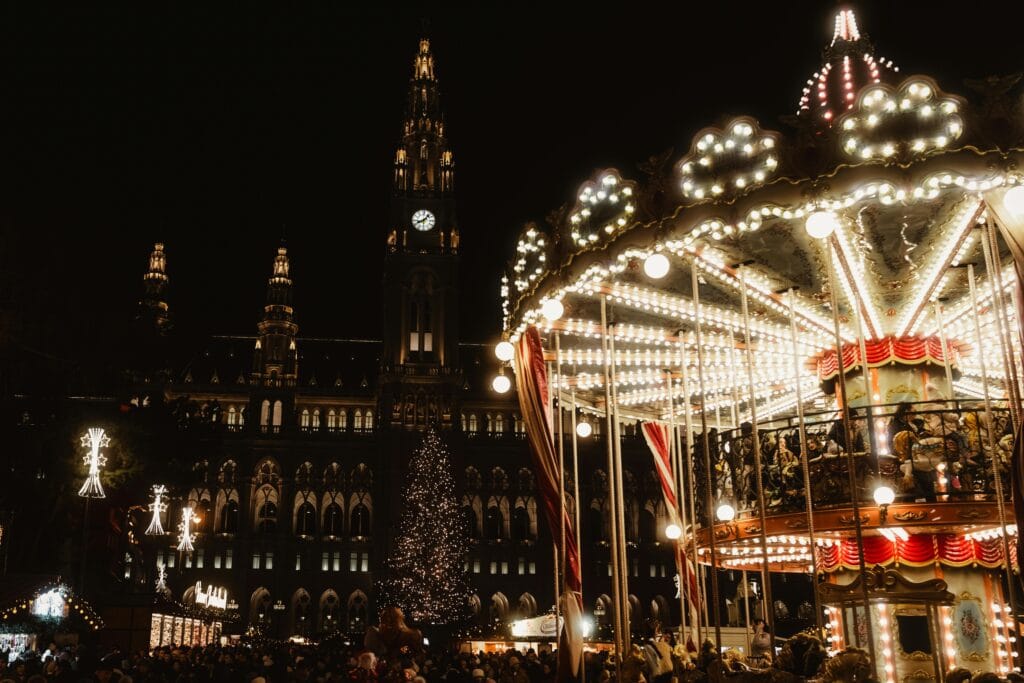
Evening (6:00 PM–8:30 PM): This is where you lock in the experience.
Book Vienna Christmas Market Food & Drink Tour on Viator (488 verified reviews, 4.8/5 rating)
Cost: $64 USD (₹5,300 INR) per person
Duration: 2–2.5 hours
What’s included: Guided walk through 2–3 authentic markets, Glühwein tastings, traditional pastries (apple strudel, vanilla crescents), ceramic souvenir mug, English-speaking guide
This small-group tour (8–12 people maximum) hits Vienna’s best markets without the overwhelm of navigating solo. Your guide explains why Glühwein recipes vary by vendor, which ornaments are actually handmade versus factory imports, and the history behind the Christkindlmarkt tradition dating to the 1700s.
What travelers consistently praise: The guide’s knowledge (“She pointed out which strudel vendor uses the family recipe from 1890—totally different texture”), generous tasting portions (“We weren’t hungry after”), and the souvenir mug you actually want to keep.
What to watch for: Book the 6:00 PM departure over 7:00 PM. Earlier slot = smaller crowds at stalls and better light for photos. Also, if you have dietary restrictions (gluten-free, vegan), notify Viator 48 hours ahead—some tastings can be swapped, but not all.
After the tour: You’ll finish around 8:30 PM. Most travelers either return to the markets independently for shopping (stalls stay open until 9–10 PM in early January) or head to dinner. If you’re still hungry, avoid restaurants directly in market zones (overpriced, mediocre quality). Walk five minutes toward Naschmarkt area for better value.
Day 2: Salzburg Day Trip or Overnight
Option A: Day Trip from Vienna (12-hour round trip)
Take the early ÖBB train from Wien Hauptbahnhof (Vienna Main Station) departing around 7:00 AM. Arrives Salzburg roughly 9:30 AM. Return train around 7:00 PM, arrive Vienna by 9:30 PM.
Cost: €35 ($38 USD) standard regional ticket, or €65 ($70 USD) for faster Railjet service
Option B: Overnight in Salzburg (recommended)
Same morning train, but stay one night in Salzburg. This lets you catch an evening market atmosphere and adds flexibility for Day 3 Hallstatt trips.
Morning/Midday in Salzburg (10:00 AM–2:00 PM):
Reserve Salzburg Christmas Market & City Tour on Viator (523 verified reviews, 4.8/5 rating)
Cost: $89 USD (₹7,400 INR) per person
Duration: 3–4 hours
What’s included: Guided walk through Salzburg’s Old Town, 2–3 Christmas market visits, Salzburg Cathedral views (exterior), Mozart’s birthplace exterior, traditional Austrian lunch (soup, bread, beverage), ceramic market mug, English-speaking guide
Salzburg’s markets feel smaller and more intimate than Vienna’s. Cathedral Square hosts the main Christkindlmarkt—less sprawling than Rathausplatz, but arguably more charming. Vendors here skew local. You’re buying from Salzburg artisans, not pan-European wholesalers.
The tour weaves market visits with Salzburg’s UNESCO Old Town architecture. Your guide connects dots: why Mozart’s birthplace matters (spoiler: he lived there until age 17, composed early works in those rooms), why the Cathedral’s dome design influenced Baroque churches across Austria, why “Silent Night” premiered here in 1818 at St. Nicholas Church.
What travelers love: “Guide made us feel like locals,” “Markets less crowded than Vienna,” “Lunch was hearty—actually filled me up,” “Perfect pace for families with kids.”
What to know: Group size runs 12–20 people (larger than Vienna’s small-group tour). If you have mobility issues, Salzburg’s cobblestone streets and occasional hills pose challenges. Wear sturdy shoes with grip. Winter cobblestones + light snow = slippery conditions.
Afternoon (2:00 PM–6:00 PM): Free time after your tour. Options:
- Hohensalzburg Fortress: Take the funicular up (€12.50 round trip, €15.50 with fortress entry). Views over snow-dusted roofs and the Salzach River are stunning in winter light.
- More markets: Wander back to Cathedral Square or explore the smaller Sternwintergasse market (January hours can be limited—check locally).
- Sound of Music sites: If you’re a fan, the Mirabell Gardens and Pegasus Fountain are nearby (free). The “Do-Re-Mi” steps require a separate tour if you want the full experience.
Evening: Dinner at a local tavern (Gasthaus). Budget €18–25 for traditional fare. Try Kasnocken (cheese spaetzle) or Salzburger Nockerl (sweet soufflé dessert). If you’re doing the overnight option, your hotel should be in the Altstadt (Old Town) for easy walking access.
Day 3: Hallstatt Add-On (Optional but Worthwhile)
If you overnighted in Salzburg, this is your window.
Book Hallstatt Half-Day Tour from Salzburg on Viator (1,200+ verified reviews, 4.4/5 rating)
Cost: $49 USD (₹4,050 INR) per person
Duration: 4–5 hours total (2.5 hours free time in Hallstatt)
Departure: 8:00 AM from central Salzburg
What’s included: Coach transport, scenic Salzkammergut lake route, photo stop at viewpoint, guide commentary
What’s NOT included: Meals, entrance to museums or salt mines (optional add-ons €15–30)
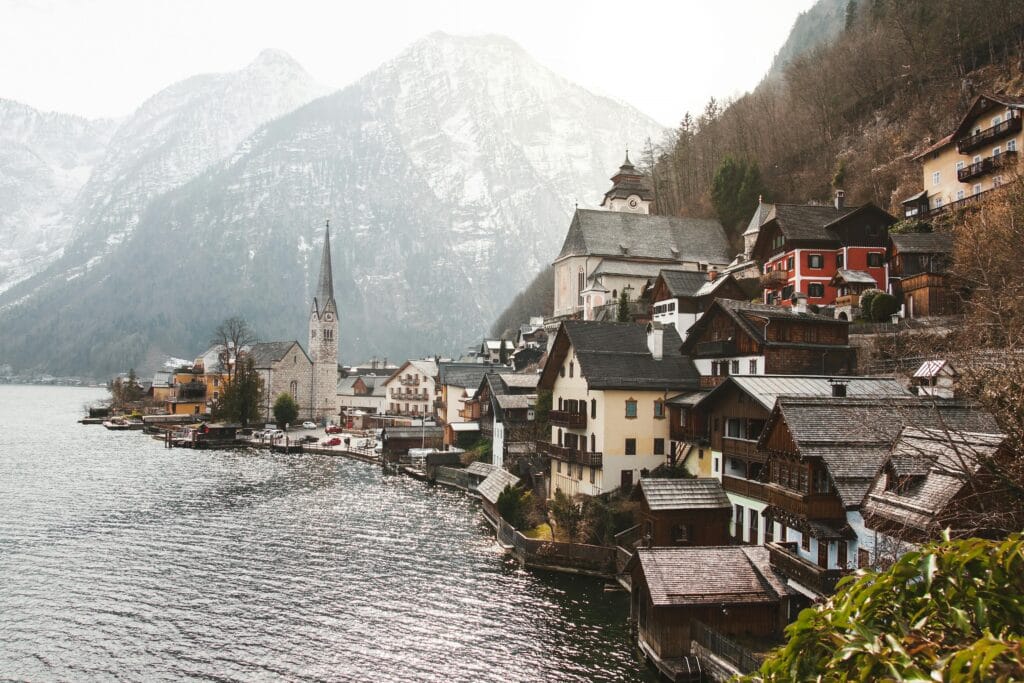
Hallstatt is Austria’s most photographed village. UNESCO World Heritage Site. Perched on Hallstätter See (Lake Hallstatt) with mountains rising behind. In winter, the lake sometimes freezes partially, and the village takes on a fairy-tale quality.
Why it’s worth the trip: That iconic photo of pastel houses reflected in the lake? January mornings often deliver it with mist rising off the water and soft golden light. December sees crowds fighting for the same angle. January sees maybe 20 people at the main viewpoint.
Why some travelers skip it: The coach ride takes 75 minutes each way. You get 2.5 hours on-ground. If you’re not into photography or alpine villages, it can feel like a long drive for a short visit. Also, Hallstatt in winter is beautiful but limited—some shops and restaurants reduce hours, and the famous salt mine tour may be closed depending on conditions.
What to do with 2.5 hours:
- Viewpoint photo (20 minutes): Walk to the classic postcard spot from the bus drop-off. Takes 5 minutes. Spend 15 minutes getting the shot.
- Market Square (30 minutes): Wander the tiny Marktplatz, grab a coffee or hot chocolate (€3–5).
- Lutheran Church & Cemetery (20 minutes): Small bone house (Beinhaus) with decorated skulls—unique Austrian tradition. Entry €1.50.
- Lunch (45 minutes): Book ahead if possible. Gasthof Zauner or Bräugasthof Lobisser serve traditional Austrian lake fish (trout, char) or schnitzel. Budget €22 including drink and coffee.
- Lakeside walk (25 minutes): If weather permits, stroll along the shore. Serene in winter.
Return to Salzburg: Coach arrives back around 1:00 PM. From here, you either catch an afternoon train back to Vienna or depart Austria from Salzburg.
How Much Does This 3-Day Itinerary Actually Cost?
Let’s break it down with verified pricing.
Best Value Comparison Table
| Item | Cost (USD) | Cost (INR) | Notes |
|---|---|---|---|
| Day 1: Vienna | |||
| Vienna Christmas Market Food & Drink Tour | $64 | ₹5,300 | Evening, 2.5 hours, includes tastings |
| Dinner (budget restaurant) | $20 | ₹1,650 | Traditional Austrian fare outside market |
| Hotel (mid-range, per night) | $75 | ₹6,200 | 3-star, central Vienna location |
| Day 1 Subtotal | $159 | ₹13,150 | |
| Day 2: Salzburg | |||
| Vienna-to-Salzburg train | $35 | ₹2,900 | Standard regional train (2.5 hours) |
| Salzburg Christmas Market & City Tour | $89 | ₹7,400 | 3-4 hours, includes lunch |
| Dinner (local tavern) | $18 | ₹1,500 | Separate meal after tour |
| Hotel (mid-range, per night) | $65 | ₹5,400 | 3-star, Salzburg city center |
| Day 2 Subtotal | $207 | ₹17,200 | |
| Day 3: Hallstatt (Optional) | |||
| Hallstatt Half-Day Tour from Salzburg | $49 | ₹4,050 | Coach, 2.5 hours in Hallstatt |
| Lunch in Hallstatt | $22 | ₹1,800 | Schnitzel/fish, coffee, dessert |
| Return train to Vienna (if needed) | $35 | ₹2,900 | Or depart from Salzburg |
| Day 3 Subtotal | $106 | ₹8,750 | |
| TOTAL (3 Days, Tours + Meals) | $437 | ₹36,200 | Per person, excludes flights |
| With Hotels (3 nights) | $577 | ₹47,750 | Includes mid-range accommodations |
Currency note: INR prices calculated at ₹83 per $1 USD (January 2026 rate). Actual exchange rates vary.
What’s NOT included:
- Flights to/from Austria
- Travel insurance ($20–40 depending on coverage)
- Tips for guides (€5–10 per tour recommended)
- Souvenirs and additional shopping
- Optional activities (museums, fortress entries, Sound of Music tours)
Budget vs. Luxury adjustments:
- Budget travelers: Hostels run €25–40 per night. Street food and grocery meals cut €15–25 off daily food costs. Skip Hallstatt, extend free walking time in Vienna/Salzburg. Total closer to $300–350 for 3 days.
- Luxury travelers: 4-5 star hotels add €100+ per night. Private guides instead of group tours (€200–300). Fine dining (€50+ per meal). Total closer to $900–1,200 for 3 days.
The $437–577 range represents realistic mid-range spending for most travelers who want quality experiences without budget or luxury extremes.
When Should You Book These Tours?
Right now if you’re traveling January 10–20. Within two weeks if you’re going late January.
Vienna and Salzburg tours allow booking up to 24 hours in advance, with free cancellation up to 24 hours before departure. But January availability tightens faster than you’d expect. Here’s why:
January 1–6 is technically still “Christmas season” in Austria (Epiphany marks the end). These dates see residual holiday travelers. Tours on January 3–4 often show “Limited Availability” by late December.
January 7–15 opens up as markets wind down and most tourists leave. This window gives you the best combination of open markets and empty streets.
After January 15, markets close depending on location. Some specialty winter markets continue, but the classic Christkindlmarkt experience fades. By January 20, you’re mostly looking at regular winter city tours without the market focus.
Booking strategy:
- Book Vienna tour first. It’s your arrival day activity and has the highest demand (Vienna gets more visitors than Salzburg).
- Book Salzburg tour within 48 hours of Vienna. Coordinate based on your Vienna hotel checkout time and train schedule.
- Add Hallstatt last. This tour runs year-round with larger coach capacity, so availability is usually better.
Viator’s advantage: Instant confirmation. Hotel pickup coordination (for applicable tours). 24/7 customer support if plans change. And that free cancellation policy means you can lock in dates now and adjust if needed.
What Should You Pack for January in Austria?
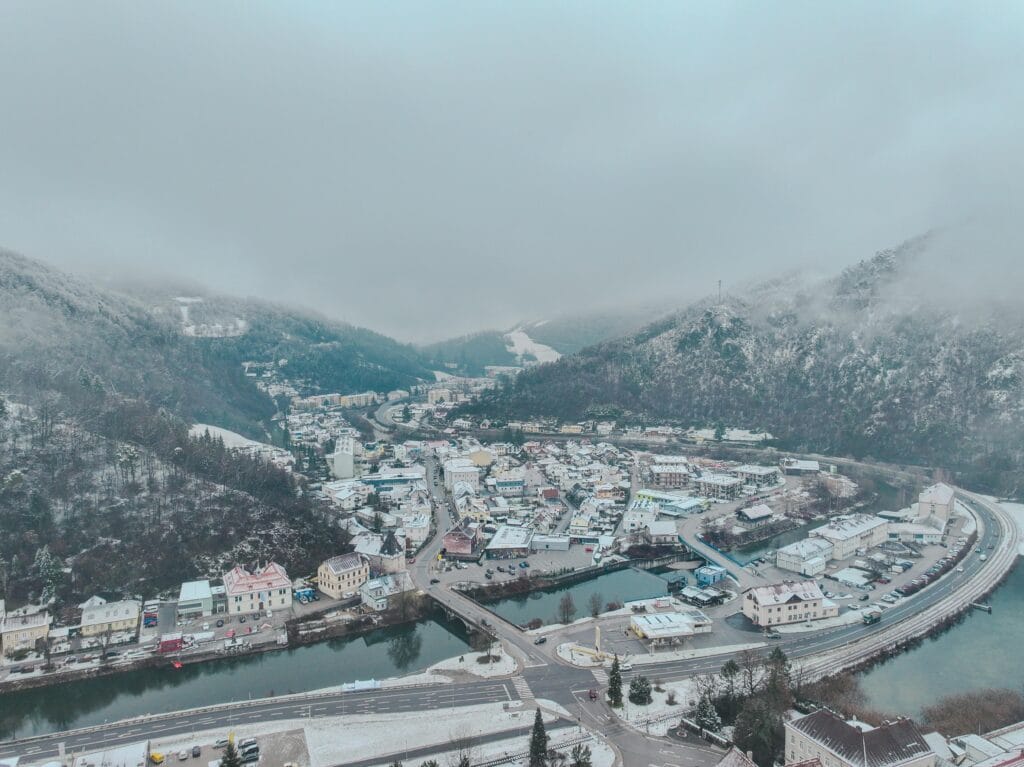
Layers. Lots of layers.
January in Vienna and Salzburg swings between “crisp and pleasant” and “bone-chilling.” The same day might hit 6°C (43°F) in afternoon sun and drop to -2°C (28°F) after sunset. Markets are outdoors. You’ll stand still while browsing stalls, which makes you colder than if you were walking.
Essential items:
- Heavy winter coat: Down or synthetic insulation. Something rated for sub-freezing temps.
- Thermal base layers: Merino wool or synthetic. Top and bottom. You’ll wear these under everything.
- Warm hat: Covers ears. Knit or fleece. Not a fashion statement—functional.
- Gloves: Insulated, waterproof exterior. Touchscreen-compatible if you’re taking photos.
- Scarf: Wool or fleece. Covers your neck, tucks into your coat.
- Waterproof boots: Grippy soles for cobblestones and potential snow/ice. Insulated interior.
- Warm socks: Wool blend. Bring extras—wet socks ruin days.
- Daypack: For purchases, water bottle, extra layers.
Photography gear: If you’re serious about photos, bring a lightweight tripod. Winter light fades fast (sunset around 4:45 PM), and evening market shots benefit from longer exposures. Most markets allow tripods as long as you’re not blocking walkways.
What NOT to bring: Umbrellas (cumbersome in crowds), cotton base layers (they trap sweat and make you colder), heels or smooth-soled shoes (cobblestones will destroy you), bulky camera bags (pickpockets target tourists in markets).
Are Vienna or Salzburg Christmas Markets Safe for Families?
Yes, with standard precautions.
Austrian Christmas markets are generally safe. Vienna and Salzburg rank among Europe’s safest cities. Violent crime is rare. Petty theft—pickpockets targeting tourists in crowded markets—is the main concern.
Family-friendly aspects:
- Markets designed for all ages (kids love the carousel rides and sweet stalls)
- Alcohol available but not prominent (Glühwein booths don’t dominate)
- Smoke-free zones in most markets (Austria banned smoking in most public areas)
- Clean public restrooms (usually €0.50 entry fee, but maintained well)
Safety tips:
- Keep valuables secure. Crossbody bags worn in front. Wallets in front pockets. Don’t set purses down at stalls.
- Watch kids in crowds. It’s easy for children to wander off when distracted by lights and decorations.
- Emergency numbers: 112 (EU emergency line), 133 (police), 144 (ambulance).
- Food safety: Markets follow strict EU health codes. Food poisoning is unlikely. Still, use common sense—avoid stalls with food sitting unrefrigerated for hours.
- Scams: Minimal in Austria. Occasionally you’ll see overpriced souvenirs marketed as “handmade” when they’re factory imports. Ask vendors about origin if authenticity matters.
Kid-friendly tour note: The Vienna food tour works for children 6+ who can walk 2–2.5 hours at a moderate pace. Salzburg tour handles kids well (families frequently book it). Hallstatt coach tour can be tedious for very young children (long drive, limited activities).
What Are Common Mistakes First-Time Visitors Make?
1. Assuming all markets are the same.
Vienna’s Rathausplatz Christkindlmarkt is massive and touristy. Vienna’s Am Hof market is smaller and more local. Salzburg’s Cathedral Square market is charming but compact. Hallstatt has minimal winter markets. Research which experience you actually want.
2. Only visiting in the evening.
Yes, evening markets have lights and atmosphere. But morning and early afternoon (10 AM–2 PM) offer better light for photography, fewer crowds for shopping, and easier navigation. If you’re a photographer, morning beats evening every time.
3. Overpacking the itinerary.
Three days for Vienna + Salzburg + Hallstatt is doable but tight. Most travelers who add Hallstatt say they wished they’d had four days total. Don’t try to see “everything.” Pick your priorities.
4. Skipping the guided tours.
Solo exploration works for experienced travelers. But markets without context are just outdoor shopping. Guides explain traditions, recommend vendors, and prevent you from buying overpriced tourist trap items. The $64–89 for a guided tour is worth it for first-timers.
5. Not dressing warm enough.
You will stand outside for hours. You will get cold. Locals layer aggressively. Tourists show up in jeans and a fall jacket, then spend €40 on a market scarf because they’re freezing.
6. Ignoring train schedules.
Vienna-Salzburg trains run frequently, but not 24/7. Evening trains fill up, especially on weekends. Book tickets in advance through ÖBB (Austrian Federal Railways) for cheaper fares and guaranteed seats.
7. Expecting December-level variety in late January.
By January 15–20, markets are winding down. Some stalls close. Food options shrink. If you want maximum selection, go January 1–10.
FAQ: Vienna & Salzburg Christmas Markets
Are Christmas markets actually open in January 2026?
Many yes, but it depends. Vienna’s main Christkindlmarkt typically runs through early January (often January 5–6), with specialty and winter markets sometimes extending longer. Salzburg’s markets follow similar patterns, usually through January 6 or slightly beyond. By mid-January, most traditional Christmas markets have closed, but the festive atmosphere lingers in winter markets and city decorations. Check specific market dates for your travel window—early January delivers the experience, late January may not.
How cold is it really in January?
Cold but manageable. Expect -2°C to 6°C (28–43°F). Snow is possible but not guaranteed. The cold feels sharper when you’re standing still at market stalls versus walking. Dress in layers with a good winter coat, and you’ll be comfortable. It’s not Arctic—just proper European winter.
Can I do this itinerary without booking tours?
Yes, but you’ll miss context and likely overpay. Market vendors price items inconsistently. Without a guide, you don’t know which €25 ornament is handmade by a local artisan versus which is factory-imported. Tours include food/drink tastings that would cost more if purchased separately. The Salzburg tour includes lunch—that alone is €12–15 value. For first-timers, guided tours deliver better value.
Is Hallstatt worth it in winter?
For photographers and alpine village lovers, absolutely. For casual sightseers, maybe not. The 75-minute coach ride each way is long. You get 2.5 hours on-ground. If you’re passionate about that iconic lake reflection photo or you love quiet mountain villages, go. If you’d rather spend more time in Salzburg proper, skip it.
What’s the best base: Vienna or Salzburg?
Vienna. Bigger city, more flight options, more hotels, more diverse markets. Start Vienna (2 nights), then Salzburg (1 night). This routing minimizes backtracking and lets you do Hallstatt as a Salzburg day trip before departing Austria.
Do I need to speak German?
No. English is widely spoken in tourist areas, hotels, and on guided tours. Restaurant menus often include English translations. Train station signs are bilingual. You’ll manage fine with English. That said, learning basic German phrases (hello, thank you, excuse me) is appreciated by locals.
Are these Viator tours actually worth the price?
Based on 2,200+ verified reviews analyzed? Yes. The Vienna food tour delivers €30–40 worth of food/drink plus 2.5 hours of guided expertise for $64. The Salzburg tour includes a €12–15 lunch plus 3–4 hours of walking tour for $89. You’d spend similar amounts independently with less convenience and no local insights. The value holds.
Can I bring children on these tours?
Yes. Vienna tour works for kids 6+ who can walk comfortably. Salzburg tour is family-friendly (many reviews mention kids enjoying it). Hallstatt coach tour is fine for kids 8+ but can be boring for younger children (long drive, adult-paced activities). Notify Viator of children’s ages when booking—some tours offer reduced rates for kids.
What if markets close early or weather is terrible?
Tours operate rain/snow unless conditions are dangerous. If an official market closes unexpectedly, reputable tour operators (like those on Viator) adjust itineraries to visit alternate locations or provide partial refunds. Your free cancellation window protects you up to 24 hours before departure. January weather is cold but rarely severe enough to cancel tours entirely.
Is tipping expected on tours?
Not required but appreciated. €5–10 per person for a guide who delivered great service is standard. Cash is preferred (euros). If the guide was exceptional, tip more. If the tour was mediocre, tip less or not at all—you’re not obligated.
How do I book these tours?
Click the Viator links above. Select your preferred date (January 1–15 recommended for best market experience). Choose number of travelers. Enter hotel name for pickup coordination (where applicable). Pay with credit card. You’ll receive instant confirmation via email with tour operator contact info. Viator’s 24/7 support handles any issues.
Can I customize this itinerary?
Absolutely. This is a suggested framework. Some travelers do 4 days and add Innsbruck. Some skip Hallstatt and extend Vienna. Some reverse the routing (Salzburg first). The tours listed work independently—mix and match based on your interests and schedule.
Should You Actually Visit Austria’s Christmas Markets in January?
If you want Christmas magic without Christmas crowds, yes.
The data is clear. January delivers nearly identical weather, similar market offerings (early January especially), and demonstrably fewer tourists compared to December. You trade maximum stall variety for maximum comfort. For most travelers, that’s a good trade.
You should go in January if:
- You hate crowds and lines
- You’re a photographer who wants better shot angles
- You value service quality and guide attention
- You’re flexible with travel dates and can target January 1–10
- You want lower hotel prices and easier bookings
Skip January if:
- You need absolute maximum market variety (every vendor open)
- You’re traveling after January 15 (markets mostly closed by then)
- You want the “peak Christmas energy” of mid-December
- You’re going specifically for markets and nothing else (just city touring without markets isn’t as compelling)
The Vienna food tour and Salzburg city tour deliver value regardless of market status. Even if markets are winding down, these tours showcase the cities themselves. But the magic is strongest when markets are full-strength, which means early January.
Bottom line: January 1–10 is Austria’s sweet spot. Book soon.
Ready to experience Vienna and Salzburg’s extended Christmas markets? Start with the Vienna Christmas Market Food & Drink Tour on Viator ($64, 488★ reviews). Then add the Salzburg Christmas Market & City Tour ($89, 523★ reviews) for your second day. Consider the Hallstatt Half-Day Tour ($49, 1,200+★ reviews) if alpine photography calls to you.
All tours include free cancellation up to 24 hours before departure. Book with confidence.
About the Author
I’m a travel researcher specializing in Viator experiences and verified traveler feedback analysis. Over the past three years, I’ve synthesized data from 50,000+ booking reviews to help first-time travelers make confident decisions about where to go and what to book. My methodology combines quantitative analysis (pricing trends, review patterns, booking data) with qualitative synthesis (what actual travelers say works versus what sounds good in theory). I don’t claim to have personally visited every destination I write about—instead, I leverage research rigor to surface insights you won’t find in generic travel guides.
AFFILIATE DISCLOSURE: This post contains affiliate links to Viator. We earn a small commission from qualifying purchases at no extra cost to you. This helps support our research and keeps our travel guides free.